
The Rancher’s Curse of Wealth (Preview)


Chapter One


Today was not the day, and Charlotte Belcher certainly wasn’t the one for Clance Fenimore. He couldn’t feel it, the electric sparks and thundering heartbeat that he hoped to feel with her. And, though it was almost doubtless, he was hoping that Charlotte, who sat across the table from him, couldn’t feel it herself either. Clance could have bet on Charlotte being more excited about the money under his name than she was about him.

Clance glanced at the young, eligible, and lovely-looking woman before taking another bite of his meat. He couldn’t possibly stomach any more of the food on his plate that he’d ordered. The questions Charlotte and her mother, who sat beside her daughter, threw at Clance made him completely off his feed. He realised what a dreadful mistake it was to request to dine with the women. Much as he’d come to know dining with all the women who’d come before her in the past had also been a mistake.

Now, as the brief silence fell over their table at the town saloon, Clance’s mind started to fill up with running thoughts like dirty water. He wished for a bride who would see him for more than his riches and was afraid to marry one who only cared about his money. When he’d invited Miss Charlotte Belcher and Mrs. Belcher to luncheon, he hoped that maybe Charlotte would be the one who would take Clance away from his loneliness and help him believe that trusting someone again wouldn’t be so bad. But as the time passed during their meal, the conversation proved that both women to be far more interested in Clance’s house and ranch than they were in him.

He’d met quite a few of the small number of eligible women in town in the past, and Clance ought to know that good women with pure, compassionate hearts were rare in Hollow, just like crimson clovers in the Texas desert.

“This meat is tender and delicious,” Charlotte murmured in a soft voice as she smoothed her hands over the fabric of her myrtle green dress. Her words broke the quiet, and Clance stopped being too much in his head.

He looked up and pushed his black hair back from his forehead before replying. “They came straight from my family’s ranch. This saloon and most other saloons in Hollow have been in trade with our ranch ever since I was a little boy.”

“Are there any members of your family that have a share in your ranch, Mr. Fenimore?” Mrs. Belcher asked most brazenly, a scaly smile on her face. From the corner of his eyes, Clance watched as Charlotte peeked at him to judge his response.

For a second then, he didn’t know how to answer the ill-mannered question, as he felt more trapped than ever. Did Mrs. Belcher or her daughter ask Clance how he was faring with keeping up with all his responsibilities around the ranch? Did they give their sympathies on his father’s death even?

Inarguably, all that the women wanted to know about was his ranch was the amount of money he owned, and the reason for such familiar and intrusive inquiries were very clear to Clance.

It was not as if he expected to not be asked anything about his estate. He did want to find a woman who would love his ranch and his home, but most importantly, someone who would love him. Both sides needed to be balanced, and just like all the other women Clance had met, Charlotte and her mother only weighed one side of the scale down. The other sat ignored and empty of any weight, which in turn made Clance feel glum.

All of Hollow knew Clance for the prosperous property that had been left to him, but not many people knew the daily difficulties of keeping the ranch together and going. With all his staff and the ranch hands looking to him for answers and solutions, Clance felt as if he was being stretched thin to keep up with all his responsibilities.

However, the last thing Clance wanted was to be a failure. He didn’t want to fail and not live up to his father and the town’s expectations. It was indeed strange, however, how his hankering to be seen as the man he was, and not the man who was merely doing well financially, could affect his life in many ways.

Clance wanted to take his leave right then and ride off far and fast. But courtesy demanded he stay and respond to what was asked. He swallowed back his emotions and retreated more into himself, deciding that he should probably start asking more about young Charlotte to avoid any more personal inquisitions from Mrs. Belcher.

“No, Mrs. Belcher, it’s only me in the family. I was only respecting the fact that my father put his life’s effort into making it what it is now by not calling it my ranch.” Clance bit back a sigh and leaned back in his chair with heavy shoulders, attempting to hide his discontent.

“And Miss Belcher,” Clance turned his attention to Charlotte, who at once sat up straighter. “I’ve heard you have quite an interest in sewing. I would like to know more about your passion.”

Just like that, meaningless chatter continued until the end of their luncheon, leaving Clance feeling dragged out and dumpish. He wondered if this was a sort of sign from God. It was his duty to protect and keep the Fenimore name in high standing with a good reputation, and although Clance struggled to carry the weight of the world all by himself, he knew that he shouldn’t allow finding love to come in between him and his duties again. The last time he’d let that happen, it hadn’t ended well for him at all. He had to focus on the ranch for now, while still having hope of finding the lady destined to be with him, in time.

Clance remembered what his father had said to him once when he was younger. The words were etched on his mind. “Matches are made in heaven, dear boy. You and the girl promised to you will find a way to each other someday.”

***

Later that evening, Clance found himself at the deputy sheriff’s office. His look fixed on the ray of sunlight that gleamed through the crack in the window and glinted off the surface of a gun that lay on the table in front of him. He braced his elbows on the corner of the desk and rubbed his jaw. The slight stubble on his skin felt rough on his thumb and forefinger.

“How did the luncheon go? I know you’d been looking forward to it,” Clance’s friend, Jack Coffee asked. He was also a competent ranger. But it had taken no longer than two minutes with Jack for Clance to know he was as stubborn as a mule. Clance looked up to meet his gaze and then quickly looked away to the side, steering clear of his friend’s watchful eyes.

“They were a bag of nails. I don’t want to say a word about it,” Clance muttered in response and slouched back in his chair. His fingers lazily drummed on the side arm.

“Ah, you’ve finally met the right woman for you to wed. This is excellent news,” Jack uttered in a sarcastic tone and stretched his long legs in front of him. Clance rolled his eyes.

“I don’t even want to think about marriage now, especially marriage to Miss Belcher. Her mother was an absolute nightmare as well.”

“You’ve been playing the lone hand since the death of your old man, Clance. I’m sure at one point you’ll have to focus more on a woman’s good qualities than her bad.”

Jack deliberately left out the one seemingly important relationship Clance had after his father’s death. Clance didn’t mind that it wasn’t mentioned. In fact, he was glad that his friend didn’t say anything about it because, to Clance, it never happened. He was trying his best to erase all the memories related to that toxic bond.

“Acknowledge the corn; no man can bear life on his own. I’m shocked you could get even this far without a woman by your side.”

“You know well how rare right-minded women are in Hollow. I’ve met many women here, none of whom I’d like to make my wife. And as for what you said earlier, it’s true to say that the lady I met today had no good to focus on. At least, she had no good in my eyes,” he responded.

Clance squirmed in his seat under the scrutiny of his friend. He knew exactly what Jack was trying to do. It was what Jack did best; read people’s expressions to know what they were thinking about and how they were feeling. Being Jack’s closest friend for many years, Clance had gotten himself caught in this habit of Jack’s many times, and it was strange how Jack always assumed Clance’s feelings correctly.

Clance shook his head and picked up one of the files of paper on the desk, covering his face while he pretended to read. “Stop studying me,” he said with a growl.

“Perhaps you should look for women down east,” Jack suggested after a moment.

“Are you saying I should travel down east only to look for an eligible woman there?” Clance frowned and looked over at Jack’s grinning face from over the top of the file.

“That’s not what I’m saying. Post an ad for a mail-order bride in the paper down east.”

“Jack, I’m not so sure about that.” Clance sighed, knowing he wasn’t so sure if that was the right way to go through with his difficulty.

“Don’t you need a woman to help you with the ranch? Don’t you need a woman to cook you a decent meal? Don’t you need a woman like every man needs a woman?” Jack pressed.

“Yes, but…”

“You’ve met my wife, haven’t you? Isn’t she a sweetheart?”  Jack interjected.

“Yes Jack, it’s tha…”

But the deputy’s voice interrupted, growing louder with each word. “Look at you. You have a ranch full of cattle and you’ve been getting skinnier since your father’s death. And now look at me. I’m always full as a tick.”  He spread his arms wide on both sides for emphasis.

“It’s true that it worked for you, but who said it would work for me?” Clance said and threw the file down with a soft thud. The pain at the side of his temples increased, and he pinched the bridge of his nose to relieve the pounding ache he felt. He needed to get back to the ranch and finish up his work there before the sun went down, but something in him made him want to stay a while longer and hear what Jack had to say.

“It worked for Vince Pruitt,” Jack said, this time with a lower tone.

Clance said nothing. He couldn’t deny that Jack’s proposition would bring him some good. His hesitation to post an ad made no sense to him now. It had worked well for Jack as well as for Sheriff Vince, and Clance knew very well how happy they both were with their wives. He’d seen the love the couples shared for each other and had always envied their affection. What if Jack was right and this worked out for him too? What if the bride he found down east was nowhere close to being like the other women he had known?

“Vince, you know him. The stuffy sheriff,” Jack spoke when Clance sat wordlessly, lost in his thoughts and the possible outcomes an ad would bring him.

“Yes, I know him, Jack.” He let out a breath.

“If Vince could get himself a dedicated wife who could bear him, I can’t see how a respected man like you wouldn’t.”

Jack shuffled through the piles of paper on his desk, and then pulled out a newspaper. He slapped it in front of Clance, pointing to a section filled with similar ads to the one he was to write. “You pen down your ad and it will be in a fine spot that will go down east, right to your future bride’s hands.” Jack smirked.

“Mail-order bride, huh?” Clance said, feeling the nervousness and anxiety bubbling up in him. He kept telling himself that this ad might bring him luck, and he would finally find someone who would love him for who he was rather than for his deep pockets.

“Enough with the sighs. Take a pen.” Jack pushed a blank piece of paper and waited patiently until Clance finished writing his advertisement.

Clance passed the note to Jack.

“Lonely hearts. Looking for an eligible young woman, a mail-order bride for a rancher who owns land in Hollow, Texas. She must be well-mannered, educated, and raised well. She would be asked to help around the ranch if needed. A good outlook and an ardent desire to learn are preferred, and of course, a woman who doesn’t possess a fear of horses or any other ranch animals.” Jack chuckled after reading the final line. “You won’t regret this, Clance,” he said. “And let me know if you ever hear back.”

Clance couldn’t help the small smile that played on his lips. He ran his shaky hands through his hair and placed his hat back over his head. Jack had nearly entirely convinced him that this would lead him down the right road to the future he wanted to live in. But the thought of marriage and being legally bonded to someone also made him feel a little sick.

Clance knew what the nervousness of getting married felt like, and he knew what the pain of heartbreak and deceit felt like as well. Clance’s chair creaked as he leaned back. The constant weight he always felt bearing down on him was now seemingly lighter, but still ever present.


Chapter Two


“After months of absence, he appears at her door, and she can’t get herself to breathe air into her lungs, nor can she help the joyful tears that fill her eyes. When she finally inhales the evening air, the smell of him surrounds her completely. Her knees buckle and she finds herself in his arms. She feels his hands around her waist, and his smile pressing against her cheek as she’s being lifted to the horse’s bare back. The two of them, together again, riding through the meadow along with the blustery win—”

“Fern! I need you to come to the kitchen right this instance.” Her mother called from the bottom of the staircase, as she always did. She looked up from the pages of her book for a moment and replied, “I’m coming right now, Ma.”

“—riding through the meadow along with the blustery winds, to the warm shelter up east where they’d spent the night and made lo—”

“Fern Baker, don’t make me come up to your room and get you down here myself.”

Fern shut her book quickly and ran downstairs. She knew that the tone her mother had just used could not be ignored—unless she wanted to be yelled at. Lifting the hem of her coral pink dress, she ran faster through the hallway and finally entered the kitchen, where she found her mother and two younger sisters. Fern smoothed down her hair and hoped that the flush on her cheeks from what she had been reading earlier wasn’t so visible.

“Mama.” She kissed her mother’s powdery cheek before stealing a raisin from the small basket on the kitchen counter and popping it in her mouth. “What did you want me down here for?” she asked and grinned when her mother slapped her hands away from her next attempt to take more fruit.

“Help your sisters lay the table for supper, Fern, and then your father and I would like to talk to you.” Fern’s smile instantly fell as she thought of what her parents could possibly want to talk about. She hoped it wasn’t another lecture about her spending hours reading instead of helping around the house as much as she was expected to. Fern couldn’t keep herself away from the stories. She was drawn to the sweeping romances and thrilling adventures lived by the characters in the books, and she hoped she could live a great life just like that someday. But her reality held no adventure or glamour. She was simply a twenty-three-year-old girl, with absolutely no great prospects.

Fern placed the basket of freshly baked bread on the dining table and took a seat across from her mother. She squeezed her father’s hand with a soft smile and then turned her attention to her other side, where Clare, her younger sister by two years, sat. She nudged Fern’s shoulder with her own before leaning in to whisper in her ear, “You aren’t in trouble again, are you?”

Fern frowned. “Of course not,” she said in response, which Clare only giggled at.

Of all her four sisters, Fern was closest to Clare. The two girls shared the smallest age gap between them and had always been the best of friends ever since they were young. As children, their mother would dress Fern and Clare in the same coloured frocks and ribbons tied around their piggy tails. The people in town would confuse themselves when trying to figure out which girl was which. Apart from having the same looks as each other—brown hair, big, innocent brown eyes, and creamy white skin—the two sisters had nothing else in common.

Fern always tried to push Clare’s nose into a book, but Clare was more interested in baking the newest recipe for banana bread instead. Her mother used to say that Fern was the dreamer and Clare was the realist. Her mother was right, and though sometimes Fern wished she were more like Clare, she also knew that she would never change to be so different.

Fern’s two older sisters were already married to reputable men in town, and now even Clare was engaged and soon to be away from home. It saddened Fern to think that yet another one of her siblings would leave her. After a few months passed, it would be only Fern and her youngest two-year-old sister, Charlie, at home with their parents.

And that made Fern often wonder how long she would have to wait for her own love story. How long would she have to live with her parents while her sisters fell in love, one by one? When would she feel the same affection for a man? Fern’s expectations of a good husband were high, but she knew there was someone out there for her. She only had to find him.

The sound of cutlery being used and Charlie’s winsome chatter filled the dining room as the family’s meal continued. Fern pushed her uneaten food around her plate while daydreaming. She looked out the open window at the cloudless, darkening sky before she heard her mother call her name to get her attention.

“Charlie, why don’t you get ready for bed?” Her mother said with a soft smile, and Fern watched her youngest sister rush out of her chair and up the stairs to her bath.

Fern wished she could go up to her room as well and continue reading from where she left off, rather than having to sit here and listen to what her mother had to say. Fern slouched her shoulders and played with the lining of the tablecloth, when she felt her mother’s eyes fall over her.

“What’s the matter, Mama? Did I do something wrong?” Fern asked while her gaze stayed on her lap. From the corner of her eye, she saw her father shaking his head. At that, Fern let out a sigh of relief. It wasn’t that she got herself in trouble often, but it was her mother’s serious tone and her father’s presence for this conversation that made Fern more nervous than necessary.

“Silly girl,” her mother said. “Were you worried about that the entire meal? About you being in trouble? Is that why you barely touched your food, Fern?”

“I’m just not quite hungry anymore,” Fern shook her head, sporting a small smile.

“Very well,” Mrs. Baker continued, straight onto the point of the conversation as she usually did. “We have arranged for you to meet with a very nice man tomorrow for supper. I certainly hope you take a liking to each other.”

Fern sat up straighter at her mother’s words. “What man, Mama?” she asked.

“Mr. Ackerman. He’s a man with a high reputation and good manners, and is also very well educated,” her father answered, leaning back in his chair. “He comes from a respected family and has a large estate, and now he’s in need of a wife. I knew his father briefly before he passed; he was a good man, just like—I’m sure—his son is.”

“You aren’t getting any younger, Fern, and you need to find a good husband for yourself before you grow too old for men’s likings. Tell me you’ll give this man a chance tomorrow. Put away your childish and romantic fantasies for just a while, and you’ll surely like him,” Mrs. Baker pleaded, reaching across the table for her daughter’s hand.

She didn’t feel like correcting her mother, saying that what she wanted in a husband was not just childish and romantic fantasies. If the man was interesting, intriguing—with a trace of mystery, perhaps—and he knew the right time to hold her hand and kiss her cheeks and scoop her away on a spontaneous, romantic getaway. Fern would marry that man without hesitating.

Maybe the man she was meeting tomorrow would be exactly what she wanted. Fern laid her palm over her mother’s cold ones and nodded. “Of course, Mama, Papa. I’ll meet him for supper tomorrow,” was all Fern could say before pushing her chair back to stand.

She kissed both her parents cheeks and made her way up to her room, with Clare trailing behind her. She wasn’t opposed to the idea of meeting Mr. Ackerman tomorrow. In fact, Fern felt a little excitement in her belly when she thought of him being like one of the many heroes she read about in her books. Would he take her hands in his larger ones and kiss her knuckles softly when they first met? Would his eyes shine with tenderness and warmth and bring her to feel swarms of butterflies in her stomach?

With a heavy, musing sigh, Fern fell back onto her bed while Clare closed the door to their bedroom and sat in the corner of hers.

“Don’t you want to know any more about the mystery man you’re to meet tomorrow?” her sister asked with a slight frown creasing her forehead. Fern propped herself up on her elbows and rested her head on her open palm while she glanced at Clare, a small playful smile tilting up the corners of her lips.

“Clare, Miss Dorothy didn’t know Mr. Cleveland before they met. He was a stranger, and a mystery man to her as well, and look at how they fell in love with each other.”

“Yes, but they’re not real people, Fern. Miss Dorothy and Mr. Cleveland are fictional, unlike you and Mr. Ackerman.” Clare brought her knees up to her chest, and Fern saw the slight worry in her eyes. “If you could only get your head out from in the clouds, you would want to ask Papa more about Mr. Ackerman before meeting him.”

“Do you think he’s dangerous?” Fern asked with a grin, thinking of all the daring experiences she would have with him, if he were.

“No, Mama and Papa wouldn’t arrange a meal with a dangerous man. But if he were, I don’t think you should be smiling,” Clare rolled her eyes and let out an exasperated breath, as if Fern’s silly ideas exhausted her.

“I’m sure he’ll be all right,” Fern reassured her sister and then looked up at the ceiling. Clare didn’t always understand her, like at this moment. Fern wasn’t going to sob and tell her mama that she didn’t want to meet the man they’d chosen for her, a man she knew absolutely nothing about. However, Clare expected her to, only because it was what she would have done if she were in this situation. But Fern liked the excitement of not knowing what kind of man she was going to dine with.

When she closed her eyes and ignored her sister’s shuffling beside her, she pictured a handsome Mr. Ackerman, with a great sense of humour. His jokes would make her giggle and her chest would feel light with happiness. And he would be an interesting man, of sorts. And what if he loved to chase after adventures just like she did? They would be perfect for each other.

As Fern, giddy with anticipation, went to bed that night, she dreamt a dream where she rode on a horse’s bare back with a young man behind her. One hand stayed around her waist as she leaned back into his chest. The winds were warm in her hair, as they travelled out west to start the beginning of their epic love story.


***

Fern stared at the man sitting across from her. The thoughts fluttering through her mind kept her from eating another bite of the pie that had been ordered for her.

“Do you not like the pie, my dear?” Mr. Ackerman asked before setting his fork down.

“No, it’s delicious.” Fern plastered on a smile, determined to continue seeming pleasant.

In all honesty, Mr. Ackerman wasn’t what she’d expected him to be. Maybe it was wrong of her to have assumed what he would be like. At the very least, it had only caused her disappointment within the very first ten minutes of conversing with him. He wasn’t intriguing, he didn’t have good humour, and he never laughed at any of the jokes Fern told him. From the sight of his round belly, Fern knew he wasn’t one for adventures either. Although she didn’t want to admit it, she should have listened to Clare and asked Papa a little about the man she was having lunch with right at this moment.

“Miss Baker, do you know what qualities a good wife possesses?” the man asked.

Fern met his gaze and wondered for a while about a proper answer. She glanced quickly at her mother sitting quietly beside her, hoping to get a clue of how she was supposed to respond, but her mother only continued eating pie whilst waiting for Fern to reply. When Fern took a deep breath and opened her mouth to respond, Mr. Ackerman cleared his throat and interrupted her before continuing to speak himself.

Fern couldn’t help but frown at his rudeness. Didn’t papa say he was well mannered? He should have also told her how boring and shallow he was, and most importantly, how much older he was.

“A good wife, Miss Baker, is also a good cook. She would have to know all the recipes for her husband’s favourite meals by heart. That would certainly make her a good wife, don’t you agree?”

Fern nodded absentmindedly. But she didn’t agree. A good wife was much more than a person who knew how to make the best biscuits and gravy. She bit her bottom lip instead of saying her thoughts aloud. And then she lowered her lashes as the stuffy man went on. She could feel her mother’s gaze on her, and a second later she felt Mrs. Baker shift in her seat, as if she wanted to tell Fern to pay attention to what Mr. Ackerman was saying.

“Being a good housekeeper comes next. She would need to see to all the domestic affairs and keep the house warm and clean.” Mr. Ackerman spoke with a mouth full of apple pie. “And in time—a very short time, I suppose,” the man let out a belly-shaking laugh, which made Fern squirm uncomfortably in her chair. “She has to be an attentive caretaker for the children that she will have to bear. These three capabilities are what it takes to be a good wife,” he said, bringing his gaze right to hers. “Do you think you have those assets, Miss Baker?”

Fern swallowed hard before taking in a shaky breath. It felt as if Mr. Ackerman was looking for an unpaid maid to bear children for him, rather than a loving wife who would care for him and be cared for by him. Ferns hands fisted around the white dinner napkin that lay on her lap, and before the panic of having to marry a man like him could claim her, Fern took a sip of water and pushed aside the negativity.

Mr. Ackerman didn’t remove his eyes from her. He was still waiting for an answer to his question. He raised his eyebrows and pushed a forkful of pie into his mouth.

“I do think I have some of those assets, Mr. Ackerman, just like most women do,” Fern said. “I do know how to cook simple meals, and though working around the house hasn’t always been easy for me, I’m quite fond of working through the house chores with my sisters. We keep each other entertained most days, and the rest of the time I occupy myself by reading.” She grinned proudly, hoping he would ask her more about the stories she’d lived through books.

Mr. Ackerman looked displeased, however, and Fern instantly regretted saying so much. It was a habit of Fern’s, to talk aloud, splashing on and on whenever she was nervous or anxious. And right now, Fern was very nervous.
“I reckon you know how to sew?” the man asked.

“Just a few stitches, enough to close an open hole in my dress and hem the edges,” Fern replied politely, ignoring her mother’s displeased, quiet sigh. Fern spoke again before her mother could interject to tell Mr. Ackerman sweet lies about her sewing skills, or about how she thought that Fern would one day become a good wife in all the ways Mr. Ackerman believed a good wife should be.

“And how do you spend your day, Mr. Ackerman?”

“Simply. I leave for work before the sun rises and come back home in time for supper,” he answered. Fern felt her heart sink much deeper into her chest. If Mr. Ackerman woke up so early, that would mean he probably went to bed early too. That wouldn’t leave him much extra time to spend with his wife. Fern almost felt sorry for the older man. Did he not do anything for fun? Ride horses, perhaps?

She knew with absolute confidence that Mr. Ackerman wasn’t going to be the hero in her story. Fern wanted more. She knew she was getting older, but she didn’t want to waste her life by doing only the bare minimum. She wanted more excitement, and more romance. She wanted to wake up every day and jump out of bed with exhilaration.

Fern thought back to the novels she’d read about the events out west. Big ranches and dashing cowboys. She could even see herself getting dirty in the mud while helping around with the ranch animals. She would wear a caddy and sit over the pile of hay, watching the sun go down while reading more books and living such a story herself.

That was the kind of life she desired to live, not the one she would have if she married a man like Mr. Ackerman. The hope that Fern had felt all throughout the night before and even that morning turned into something foul beneath her ribs. Thankfully, the meal ended quickly. Fern carefully kept answering the older man’s questions, and in turn, always noticed the disapproval in his eyes. Eventually, the conversation came to a stop and there were only crumbs of apple pie remaining on every plate on the table, except for Fern’s.

Mr. Ackerman shook Fern’s hand and tipped his hat to bid goodbye to her and her mother before leaving the saloon where the three of them had dined. Once he rounded the street corner and disappeared from Fern’s sight, she let out an exhausted breath and slumped back down into her chair with her head hung low.

“Well?” Fern looked at her mother from the corner of her eyes.

Mrs. Baker looked equally tired, but more worried just by listening to the conversation Fern and Mr. Ackerman had shared. She rubbed the tip of her index finger along the lines of her forehead and then sat down. “He wasn’t so impressed with you, that’s for sure.”

“Mama, I wasn’t with him either. He’s old and boring and expects me to be his maid more than his wife.”

“You need to understand that’s what most men want, dear. A good cook, a good housekeeper, someone who would be able to take care of her husband and not spend all her time inside her head dreaming,” her mother mumbled. “You promised you would try to give this man a chance, Fern.”

“And I did, Mother. But he was awful, and I certainly would rather stay at home my entire life than live with Mr. Ackerman,” Fern cried softly. She hated the worry she saw in her mothers’ eyes, and she wished she could do something to be less of a burden than she was already. Mrs. Baker looked up at the heavens and then cut her gaze back to Fern.

“I suppose we could find you a better man,” Fern’s mother spoke. “Preferably, one in better fitness as well.”

Fern laughed with relief and wrapped her arms around her mother’s shoulders, hugging her tight to convey how much she appreciated her understanding. “Thank you, Mama,” she said softly.

All the way home, Fern’s mind spiralled with thoughts of what she was to do next. She didn’t want to sit and do nothing until another suitor wished to meet her. When she pictured dining with a man worse than Mr. Ackerman, Fern shivered with aversion. She knew there was a solution to her problem, and she had only to stay patient while looking for it for the next couple of days.

It was fortunate that Fern had always been the optimistic sister in the family. The one whose hope for a happy ending never lessened no matter what she went through or what was said to her. And that optimism was exactly what would see her through to achieving her dreams and living the life she desperately wanted to live, rather than settling for someone just because she had to.

When Fern and Mrs. Baker arrived home, the front door opened, and Clare rushed out. “What happened?” she asked in a frenzy. Their mother simply shook her head and walked past the girls into the house, mumbling incoherent words as she went.

“He was an absolute bore, Clare,” Fern replied, linking her arm with her sister before making her way inside. “He was old and stuffy and had this terrible idea of how a good wife should act and what she should do.”

“You didn’t like him,” Clare muttered, more as a fact than a question, and Fern nodded in agreement. “I’m sure you’ll find someone you like someday, Fern, but now even I’m worried about you.”

“What do you mean?” Fern stopped to turn and look at her younger sister.

“You’re looking for a great story to live in, one with thrilling adventures and heart-stopping romance. But sometimes you forget that you don’t live in the pages of a fictional book. Not all men will be perfect like the ones you read about. Everyone has flaws, and though I know from your face that Mr. Ackerman has flaws you can’t overlook, if you meet another man with imperfections, will you be willing to look past them?” Clare asked while looking at Fern.

After a moment of thought, Fern nodded. “Of course, I would, Clare. I’m not that selfish. If I feel a connection towards him, despite his bad qualities, I’ll want to be with him no matter what.”

Clare looked away and dropped her shoulders. With a much softer tone she said, “I believe you. It’s just that I don’t want you to waste your life running after what you want, but never catching it. We both know it’s a possibility.”

Fern didn’t get mad at Clare even though she knew she should. Her words hurt, but as always, Clare only spoke the painful truth to protect Fern. And she was right. This was all she had in her life right now, her drive to live passionately. But for Fern, it was enough. Fern believed, unlike Clare, that she could catch what she chased.

Once inside, Clare left her to continue baking. Fern could hear her mother’s muffled voice as she spoke to her father in the study. She decided it would be best if she didn’t join them. So, Fern picked up the newspapers lying on the living room table and walked up to her room.

As she had walked back home with her mother, an unclear notion had come to her, and she thought further on it now. Mail-order brides. Fern closed the bedroom door behind her and flipped the pages of the paper to the advertisement section.

She’d heard about mail-order bride ads from many girls in town, and now was curious to see a posting herself. She read through each ad until her eyes fell over one ad that got her heart racing. Fern leaned in, intrigued, and her pulse fluttered as she read on. It was an ad from a rancher living out west, who also owned his own land. Fern imagined the wild yet romantic land that his house must be on, and giggled excitedly to herself, forgetting all about Mr. Ackerman.

This was the right thing, right? Would answering an ad be the one thing that Fern needed? Would she find her dream man this way? Fern didn’t allow herself to think about her rash decision any more than she already had. She quickly wrote a reply to the ad and ran out of her room to send it. She was uncertain, but the urge to take a risk won over her doubts about her choice.

“Mama! I’ll be back shortly, I promise,” Fern shouted before leaving in a hurry. The grandest adventure of her life awaited her, and Fern only hoped that the mystery rancher’s response would finally mean she could stop running.


If you liked the preview, you can get the whole book here


If you want to be always up to date with my new releases, click and…

Follow me on BookBub

Captive Hearts of White Bear Creek (Preview)


PROLOGUE

The four men lay in wait, watching as wagons slowly entered the long, winding road that led to Braughtenboro. “No, no,” Lonnie’s father whispered. “Not that one. It’s too small. We need one with some real good pickins’.”

Finally, as the dawn broke five days after they had arrived in Montana, his father turned to them each in turn, nodding slowly. “Today. Today is the day, boys.”

And it turned out, it was. A few hours after sunrise, a covered wagon began to rumble down the path, being driven by an anxious-looking boy Lonnie’s age, twelve years old or perhaps a bit older. Two women, both dressed in various fineries, sat behind him, and the wagon itself was large and unwieldy, looking like it may tip over at any moment.

“Wait for it,” his father whispered, tracking the carriage with his razor-sharp eyes. “Wait for it … almost there.”

“Not so fast, George,” a voice came from behind them.

Stunned, all four of them turned around. Standing behind them was a sheriff, young, but still looking foreboding in his stance and the way he held his revolver level with George Underwood’s head.

“That’s enough of that,” the sheriff said, prowling towards them like a cat. Behind him, Lonnie could see two other officers crouched behind brush, their guns also level with the men. “This ends here, George Underwood. I’ve been following you since Nevada. I’m not letting you steal from honest, hard-working men.”

“Is that right,” George sneered, slowly drawing his own weapon from where it was anchored securely at his waist. “We’ll see about that.”

Both men drew their weapons at the same time, but the sheriff was just a hair faster.  Lonnie never was able to tell who had fired first. All he knew, both then and now, was that the shot hit his father squarely in the chest, the blood blooming through his coat like a bright red poppy. George slumped over, dropping his revolver to the ground with a surprisingly gentle thud.

The sheriff cursed loudly, having been shot in the shoulder by George before the man had fallen. He fell to the ground, gripping his arm, shouting at his two men to keep shooting. They obeyed, firing shots at Wolf, Dirt, and Lonnie himself.

Lonnie heard the blast in his ear, felt the pain sear through his body as he, too, fell to the ground, dust billowing up around him.

This is it, he thought, staring up at the sky for what he thought would be the last time. This is how I am going to die.

Instead, he blinked back into consciousness sometime later, unsure of how much time had passed. The sun was starting to fade towards the West, but Lonnie still didn’t know if it had been hours or days that had passed. Wincing, he reached up to touch his ear, finding it still intact except for a tiny nick, caked in dried blood.

The bullet, he realized, must have just grazed him, but the sheriff and his men had thought him dead so had left him. A pool of blood splattered the ground where Lonnie had been laying, so it was understandable why the other men had thought that.

Slowly, Lonnie rose to his knees, blearily taking in his surroundings. On his right, the body of Wolf lay face-up, blood pooled in the dirt under his ribcage. Wolf’s eyes were still wide open, glazed and staring blankly at the sky. Dirt was gone, as was the sheriff and his two men. Lonnie wasn’t sure if they had escaped, or had simply crawled off somewhere else to die in peace.

To his left lay his father, George Underwood, still slumped in the same position he had been when he’d first been shot. George’s back leaned up against a hearty bush of sage, stained red with his own blood. Inching closer, Lonnie studied his father. George’s eyes were closed, and he looked strangely peaceful, unlike Wolf’s wide-eyed look of fear. He could have been sleeping, if not for all of the dried blood painting his overcoat, and the cold way his skin felt when Lonnie reached out and touched his father’s dead hand.

“Dad?” Lonnie whispered, using a phrase he hadn’t said in years. It was clear his father was dead, but something in Lonnie’s brain just couldn’t wrap around the fact that he was really, truly gone.

Inexplicably, Lonnie began to cry. Tears rushed hot and salty down his face, leaving wet, slick trails behind. His emotions surprised him; his father had never been a sentimental man, and he had taught Lonnie to be the same. But right then, stuck in the middle of nowhere, with his dead father by his side, Lonnie had never felt more alone.

“Son?” a voice came, like an angel. But it wasn’t his father’s voice. Turning slowly, wondering if the sheriff had returned, he came face-to-face with another man.

The man looked like a rancher, sitting regally atop a chestnut-brown horse, his face lined with wisdom, and his eyes large and kind. He gazed down at Lonnie not with contempt, which was what he was used to, but with sympathy.

“Yes?” Lonnie whispered, so quietly the man couldn’t hear him.

“Son?” he repeated, holding out a hand to Lonnie. It was enormous, tanned from age and hard work, and to Lonnie, nothing had ever looked more comforting. “Do you need help?”

Wordlessly, Lonnie reached out and grabbed it, desperate for a lifeline.


CHAPTER ONE

Celia Lawton stared down at the pot on the stove until her eyes blurred. The silence in the house pressed onto her, threatening suffocation. Her father was not home yet. However, this was normal in the Lawton household.

She sighed, hating that dinner was about to be beans yet again. Celia was a people-pleaser, even if the person to please was just her father. The thought of disappointing him, especially after all they had been through, made Celia feel hot with shame and queasy with sadness. She began scouring the kitchen, praying there would be something there that she had missed the first time around.

They were completely out of meat and bread, and only had a few sad, shriveled onions and potatoes left in the root cellar beneath the hearth. Celia knew her father did not have any money to buy more meat. In fact, he didn’t have any money to buy food at all. The onions and potatoes had come from their own meager harvest this past year, and the beans were a gift from her father’s sympathetic boss, who ran Tyson’s Goods and Supplies. He claimed he had ordered too many bags of beans from the store, but Celia knew better. He was just saying that to avoid damaging her father’s pride further.

How had it come to this? While they had never been rich, Celia remembered when she was a girl, and her mother would have plenty of food to cook hearty meals each night; her vegetable garden lush and stretching towards the sky in a silent prayer. Now, the vegetable patch grew nothing but the occasional ground produce, and the breathtaking flower bed her mother had kept had been reduced to a pile of shriveled, dried-up weeds. Every year since her mother died, Celia had promised herself she would go out and start fixing up the prized flower garden, which was what she knew her mother would have wanted. But without fail, every spring she would get just as far as the door, look out on the once-beautiful patch of land, and turn back.

Would her mother be proud of the woman she had become? It was a question Celia asked herself frequently, especially when she was home alone and could sometimes still swear she heard her mother’s footsteps creaking on the floorboards. The answer, however, always seemed to escape her.

The door creaked on its hinges, a sign that Celia’s father had finally gotten home. Her father’s arrival meant that Celia could stop thinking about her mother and focus on someone else, for which she was grateful.

“Hi, Papa,” she said, turning from her spot at the stove to study him.

He had always been a handsome man, that much, Celia was sure of. But every year since his wife’s death, he had grown more and more stooped, his once winning smile fading away into a hard, thin line.

Easing his hat off his head, Celia’s father nodded to her and then started to furiously rub his tired eyes.

Celia felt a pang of sympathy for the husk of a man in front of her, mingling with an ever-present coil of hot, painful guilt. She knew everything he did was for her. – toiling away in the fields early in the day, then heading down to Tyson’s, where he stayed until after sunset. Anything to give her a better life.

Celia knew her father had no interest in working at a general store, no interest in piling bags of chicken feed and grain on top of each other all afternoon, or ringing up customers buying flour, milk, and the occasional sweet. No, her father’s passion had always been in farming, in loving the land and seeing what it would give you in return. She remembered the way her parents had always worked in harmony, her mother singing songs from church as she cheerfully weeded her garden, her father whistling in return as he led their old mule, Monk, through the fields with his plow, leaving churned up reddish-brown earth in his wake. It was a beautiful sight, and always what Celia imagined her life with her future husband would look like.

“Hey, Sunflower,” her father said, stamping a kiss on Celia’s forehead. Most eighteen-year-olds would shy away at their father’s use of a childhood nickname, but Celia still craved that little piece of normalcy. It reminded her of the man her father used to be, back when their family was complete. “Sorry, I’m a little late.”

“That’s okay, Papa,” Celia replied, turning back to the stove. “Sorry, dinner is beans again. I was going to fry up some potatoes and onions to go with them if I can scrounge up a bit of lard.”

“That sounds wonderful, Celia,” her father said earnestly. ‘Thank you.”

His gaze slid to their tiny back window, which overlooked the farm. In the years since her mother’s death, the land had grown more and more barren. First, it was the corn, then the carrots, and then the peas. Now, onions and potatoes were about all her father could manage to keep alive until harvest. Celia knew the townspeople whispered about her father’s bad luck, his lost motivation, but Celia knew the real reason he could no longer keep anything alive. The ground could sense the heartbreak within him; it couldn’t provide for him if he didn’t love the land anymore.

They both stood in silence for a moment, Celia mentally preparing herself for what she would do if she couldn’t coax enough lard from the near-empty tin. They certainly didn’t have any butter. Would a little water work to steam the vegetables? As she turned to see what the contents of the lard tin held, she heard a harsh knock at the front door. This brought both Celia and her father to attention. They looked at each other, confused.

“Are you expecting visitors, Papa?” Celia asked, knowing the answer as soon as the words left her mouth. Her father hadn’t had a visitor since Mama had died.

“No,” he said softly, making a few quick strides towards the door. When he opened it, it revealed the face of Tom Woolcock, their landlord. Her father blinked, looking confused. “Oh. Hello, Tom.”

“Hello, Angus,” Tom said with a smile that didn’t quite reach the corners of his face. Celia’s heart sank. Tom Woolcock was one of the most cheerful men in town, always flashing genuine grins to everyone that passed by the saloon he owned and operated. She had never seen him look this solemn.

“What can I help you with, Tom?” Celia’s father gestured for Tom to take a seat on the dusty settee. “Would you like something to eat or drink?”

Celia blanched, hoping Tom wouldn’t take up the offer, since she had nothing but a pitcher of water and rapidly cooling beans to serve him.

Tom pulled his hat off and held it to his chest but remained standing. “Angus, I’m sorry to have to do this. You know it’s not what I want to do. But, the fact of the matter is, I’ve got bills to pay too.”

Celia glanced rapidly from Tom to her father. He remained stone-faced. What in the world was going on?

“What do you mean, Tom?” her father said in a voice that made Celia believe he knew exactly what Tom meant.

“You haven’t paid rent in four months, Angus,” Tom said, looking down. “I’m sorry, but if you can’t pay something this month, I’m going to have to find a new tenant.”

Celia spun to face her father directly, panic etching itself into her features. “Papa? What is he talking about?” Celia knew they were struggling to pay the bills, but four months behind on rent? She’d had no idea it was that bad.

Her father ignored her, instead keeping his gaze on Tom. “I understand, Tom. I’m doing my best; I promise you that.”

“I know, Angus,” Tom said solemnly. “And I’ve tried to be as understanding as possible. Especially with Anna gone, I know it ain’t been easy for y’all around here.”

“No, it ain’t been.” Her father’s voice was even, but Celia could hear the pain underneath. Her own pain was building under her breastbone, a desperate desire to somehow help her father out of this situation.

“I know,” Tom repeated, starting to look visibly uncomfortable. “And like I said, I’ve tried to be understanding. But … the fact of the matter is, Angus if you can’t pay your rent this month, y’all are gonna have to find somewhere new to live.”

“Okay.” Her father said this flatly, then turned his back to Tom and looked back out the lonely, dirty window. Without this farmland, Celia knew he would be even more devastated. He lived for two things: his daughter and his land.

“Well,” Tom said, shifting his gaze quickly to Celia and then to the floor. “That’s all I came by to say. I … I hope y’all have a nice night. Angus, swing by the saloon when you have that money ready. Otherwise …” His voice trailed off, and he cleared his throat uncomfortably.

“Goodnight, Tom,” Celia said stiffly, taking two quick strides to the front door and yanking it open, a gesture that would let Tom know, in no uncertain terms, that it was time to leave.

“Goodnight, Celia. Angus.” Tom walked out the front door, sliding his hat back in place. He shot one last, sympathetic glance at Celia, and then to her father. “I’m … I’m sorry, y’all.”

Celia bit her tongue to avoid saying something uncharitable in return. Her father ignored him entirely. Tom then ambled back to his horse, which was tied to the post at the bottom of the hill the house stood on.

Both Celia and her father sat in silence for a moment, neither of them even bothering to close the door. Suddenly, her father spun on his heel and slammed the door shut with such force that their tiny house rocked back and forth. He then let out a string of curses that Celia had never heard him use. If Mama had still been there, she would have let him have it for using such foul language.

“Papa – ”  Celia started to say, but he held up his hand and cut her off.

“Celia, darlin’, this ain’t your fault.” Her father rubbed his already bloodshot eyes over and over again, then stared at the ceiling. “I’m gonna figure it out.”

“But Papa, I really think you ought to – ”

“I said I’m figuring it out!” he thundered. Celia stepped away from him, shock and hurt pressing down on her chest. He had never raised his voice to her that way; he had barely ever scolded her as a child.

She remembered her mother’s careful chiding. “I swear, Angus, it’s like that child can do no wrong as far as you’re concerned”.

Tears collected rapidly in the corners of her eyes. Why aren’t you here when we need you the most, Mama?

“I’m sorry,” Celia’s father said after a moment, taking a step towards her and cupping her smooth cheek with his rough, farm-worked hand. She tried to blink the tears away.  “I’m going to take care of it, Sunflower, I promise.”

“How?” Celia whispered.

Her father took a deep breath. “I have an idea,” he said slowly, pulling his hand from her cheek to rake it through his auburn hair, the same color as the dirt he loved so much. “I have an idea.” He repeated the words, but more confidently this time.

“What?”

“Don’t you worry,” he said, giving her another quick kiss on the cheek. “I’m gonna go take care of it right now, and by tomorrow morning, everything will be right as rain.”

“But – ”

“Don’t wait up for me,” her father said, jamming his hat back over his flyaway hair and heading for the door. “I’ll be back home late.”

“Papa, wait – ”

But he was already out the door, walking at a fast clip towards the barn where his mule, Chuck, was penned. There was nothing Celia could do but watch him go.


*****


Two hours passed, and still, Celia’s father had not returned. She tried to go to bed, but to no avail. Her entire body reverberated like one huge knot of anxiety. There was no chance she was getting any sleep in this condition, but it took Celia several hours before she came to this conclusion, tossing and turning stubbornly for as long as she could.

Finally, she got back out of bed, went downstairs, and rummaged through the kitchen drawers. She pulled a stubby, well-used candle from one, along with a box of matches. Fumbling with them for a moment, she hurried outside to the stable.

Inside the big double doors, she took the lantern that hung from a hook. She lit the candle and placed it inside to guide her way.

Chuck’s stall was the only one in the stable that was still in use. Monk had died years ago. Celia still remembered the way her father’s voice had caught when he told her and Anna that the old mule had finally dropped dead in the field; right after the day’s harvesting was done. Their two other horses had been sold after Anna died, so they could pay their rent for the months Angus had been too grief-stricken to leave his bed.

Celia’s mind spun in circles as she made her way to the back of the stable. How had things gotten so bad? What had she missed? What had she been too blind to notice?

When she got to the last stall, which had once been Monk’s, Celia dropped to her knees and moved the straw aside until she could see the loose floorboard, which she popped up. Holding her breath, she waited a moment before shining the light of the lamp into its dark and shadowy depths.

She looked into the trunk that held the family jewelry. All of her mother’s pieces were still there. It took everything in her power not to reach in and caress the well-loved jewels, the slightly tarnished silver. Her grandmother’s jewelry lay beside it, also untouched. Her father’s beloved knives, the ones that he used to cut meat and fish, still remained as well, shiny in the lantern light. In fact, only one thing was missing, and when Celia saw what it was, her heart sank.

Her father’s shotgun.


CHAPTER TWO  

         The next morning, Celia was back at her post at the stove, making grits. She had tossed and turned most of the night, wondering when she was going to hear the clip-clop of Chuck’s hooves coming down the road. Finally, she dozed off a little bit before sunrise. When she woke, she’d crept down the hall to her father’s room, hoping to see him asleep. But his bed was empty; still made from the morning before.

Celia made enough grits for both herself and her father, in the vain hope that he would walk through the door at any moment, whistling and letting her know things were, fine, just fine, and that he had simply gone to talk to Tom and convince him that they needed just a little bit more time to pay the rent.

As she was cleaning up after breakfast, Celia finally heard the sound of boots crunching on the gravel. Her heart soared as she listened for the sound of the key sliding in the lock. She turned towards the door, mustering up a smile, and waited for her father to walk in.

But it wasn’t her father.

It was her aunt Rose, her father’s youngest sister. Rose dropped the house key she’d used to let herself in into her apron pocket.

Celia’s father and her aunt shared the same reddish-brown hair, a few shades lighter than Celia’s own, but the similarities ended there. Rose was effervescent, fun, and lively. Even at age thirty-three, after having three children, men turned to stare at her on the street. Her cheeks were rosy like her name, her blue eyes bright. However, the sparkle Celia usually saw there was gone.

“Aunt Rose?” Celia walked towards her aunt, who was so fine-boned and small, Celia always felt as if she was talking to a child when she stood near her. “What are you doing here? Where’s Papa?”

Aunt Rose walked slowly towards Celia, her arms already reaching towards Celia like she was fumbling around in the dark. What in the world was going on?

“Aunt Rose?” Celia repeated, panic starting to creep into her stomach, squeezing at her heart.

Rose sighed. “Oh, Celia. Sweetheart.” Tears then sprang to her eyes. “I’m so sorry.”


*****


Robbery. Armed robbery.

That was what Rose told Celia. At least her father wasn’t dead, she tried to tell herself. It could be worse.

Right now, however, nothing seemed like it could be worse than the sad truth.

“He thought it would help,” Rose said softly, her eyes on the floor. “I guess he thought it would solve all of y’alls money problems. And that he wouldn’t get caught.” She blinked away tears, her voice breaking. “He thought … well, Celia, I can honestly say I don’t what he thought. I can’t imagine what was going through his mind.”

Celia swayed like a piece of tall grass in the breeze, feeling strangely empty as her world crumbled from beneath her feet. Her father had robbed a bank. Her sweet, gentle father, the same one who had cried when they buried their old hound dog, Jake, by the tiny stream that ran along the back of their house. The same one who had sung Celia songs and made up stories for her every night when she couldn’t fall asleep. How had that man robbed a bank?

“Where is he?” Celia finally asked, once Rose had fallen silent.

“Jail, sweetie. He’s in jail.”

“Jail?”

Even though it only made sense that he would be in jail, it still made Celia’s head spin to hear those words out loud. Her heartbeat in a rapid tempo as she imagined her soft-spoken father behind bars. Jail was for criminals, bad men who hurt people. Not her kind, wonderful father. It just couldn’t be.

“For how long?”

“Not sure yet. But … considering, I’d say a long time.” Rose stopped for a moment, swallowing. She buried her head in her hands after a moment, and Celia watched as her aunt’s narrow shoulders rocked back and forth. “Oh, Angus,” she said, lifting her tear-streaked face back to her niece.

A knock on the door startled Celia but also brought her a sense of relief. Finally, there might be something else to occupy her mind from this sudden nightmare. But who could it possibly be now? She hurried to the door and yanked it open, finding herself face-to-face once again with Tom Woolcock.

“Oh. Tom,” she said coldly, feeling like last night’s conversation was a million years ago. “It’s not really a good time.”

“I’m sorry, Celia. But it’s going to have to be.” Tom walked in without asking. He stopped short when he saw Rose sitting on the settee, eyeing him. “Oh. Rose.” His voice changed. “I didn’t know you were going to be here.”

Like most of the men in town, Tom was completely enamored by Rose. Rumor was that he had even asked for her hand in marriage when they’d been around Celia’s age, but Rose had declined and then married her husband Waylon two years later. But, despite the fact that Rose was a married woman, Tom had never stopped staring at her, going out of his way at every opportunity to speak to her or put his hand on her arm.

“Tom.” Rose’s voice was flat.

“Ladies, I’m very sorry.” He hesitated for a moment. “I heard about Angus.”

“Thank you, Tom,” Celia said politely, turning away from him in the same way her father had last night. “What can I help you with now?”

“Well, I heard about Angus first thing this morning. Of course, I’m sure it’s just a big misunderstanding, and it’ll get cleared up quickly, but …” He sighed, letting his eyes wander around the modest home before landing on Celia again. “I … I have someone who is to start letting this house next week. Fact of the matter is, I’m losing money on this property, and there’s no way y’all are going to be able to pay the rent with Angus’ … situation. I’m sorry Celia, honey, but I’m going to need you to leave by Friday.”

“Leave?” Celia squeaked out, her head spinning.

Leave her home? The only home she had ever known? The only home where her mother had ever hugged her, had tucked her into bed?

No. No.

Celia felt bile rising in her throat, nausea swimming like a fish in her stomach. She tried to say, something, anything, to prevent this, but her mouth simply wouldn’t form the words. It was like her brain already knew there was no hope.

Silent, Celia sunk onto the settee, feeling a tiny piece of comfort in the solidness beneath her.

“That ain’t right, Tom.” Rose had risen to her feet and was staring Tom down, an impressive feat considering that Tom was almost a foot taller than her. “That ain’t right, and you know it. She’s a child.”

Tom looked uncomfortable. “Look. Celia is eighteen years old. That makes her a tenant just like her father. Hell, she’s old enough to be married herself. She could have been married two years ago.”

Celia’s cheeks burned. Feeling a strange, fleeting sense of embarrassment, she turned away, choosing to focus on the dry, brittle stalks shooting out of her mother’s dead garden instead.

“So, she’s on her own?” Rose shot back, hands on her hips. “That ain’t very Christian of you, Tom. I thought you were better than that.”

“I’m sorry,” Tom whispered, chagrined by Rose’s scolding. “I really am. Trust me, this ain’t easy for me either.”

Rose rolled her eyes and then turned to Celia. “Celia, honey, it’ll be okay. You can come stay with me. For as long as you want. Don’t you worry about a thing.”

Celia nodded, a rush of tears finally flooding her eyes. She hadn’t cried since her aunt had broken the news. Suddenly, the gravity of her situation set in. She had lost her father and her home on the same day. What did she have left? Surely life couldn’t be so cruel to her. She felt her desperation becoming stronger with every breath she took.

“Well, there ya go.” Tom shifted from one foot to another, clearly growing even more uncomfortable.

“You should leave, Tom,” Rose said frostily, nodding towards the door. “We don’t need anything from you. I’ll see to it that Celia is out by tomorrow night.”

Tom nodded, looking almost relieved at the prospect of being kicked out. “Like I said, I’m – ”

“Good night, Tom.” Rose’s voice was firm. She turned towards Celia, blocking Tom’s view as the tears began to stream down Celia’s cheeks in earnest.

“It’s okay, sweetheart.” Rose’s thin arms offered little comfort to Celia. “Everything will be all right.”


*****


Celia was miserable. She had been staying with her aunt Rose and uncle Waylon for a week now, and she felt like she was going crazy. Her three little cousins, Henry, Waylon Jr., and Elizabeth, were constantly underfoot, both confused and awed by the sudden presence of their older cousin in their home.

Everyone in town knew about her father’s crime. Within days, Celia and her family had become pariahs. She was too ashamed to even step foot into Tyson’s. She had put in applications to every shop in town, but because of her father, no place would hire her. No mother wanted her children raised by a girl whose father was a criminal, so being a nursey maid or a tutor was out of the question too. She had no money, barely any possessions, and no place in the town any longer.

Celia was desperate. This desperation was in the forefront of her mind as she climbed the steps to the attic one morning about a week after her father had been arrested. A newspaper was tucked under her arm. She could care less about the news; this was simply a last-ditch effort to get a moment of peace away from her cousins.

She flipped through the pages idly, skimming the words but hardly absorbing any of the information. Frustrated, she snapped the newspaper shut and tossed it away from her, letting it float softly to the attic floor. She had hoped reading the thing would help keep her mind off her father, but it was no use. All she could imagine was his face the last time she had seen him, the worry and fear in his eyes. He loved the newspaper. Was he allowed to read it in jail?

Tears blurred her eyes, one fat drop snaking down her cheek and splashing onto the abandoned newspaper. She stared at it, trancelike. What was she supposed to do? Where was she supposed to go? She couldn’t stay with her aunt and uncle forever.

The questions spun in her mind like a tornado, bumping up against one another but not offering any solutions. Sighing, she picked the newspaper back up, beginning an attempt to take her mind off her plight, when something caught her eye.

It was the ad that her tear had landed on, the ink a little smeared from the drop.

Good-looking German rancher, age 29, seeking the companionship of a young girl or widow; object matrimony, it read. Cooking and cleaning required. Find your new home and purpose on a lovely Nebraskan ranch.

Celia blinked a couple of times. A mail-order bride. Could her solution really be that simple? Could she really write to a lonely man and get a husband in return?

Celia had always dreamed she would marry for love, but it didn’t look like anything in her life was going as she hoped anymore. Without her father there for her to take care of, there was really no reason why she shouldn’t get betrothed. After all, she was eighteen years old; most of her childhood friends were already married.

Trying to ignore the tiny sense of defeat coiling in her stomach, Celia tramped ungracefully back down the stairs. She ignored her cousins as they immediately swarmed her, asking in unison where she had been and what she was doing.

She walked to the far side of the house, where her uncle Waylon’s office was. Waylon was barely ever there; he only kept an office so he could have a place to order supplies for the farm and pay taxes. Slipping in, she pilfered a scrap of paper and one of his quills.

Sitting down at his desk, she began to write. When she was done, she stuffed the letter into an envelope, making sure to copy the address on the ad carefully. Tears still seemed to sit right behind her eyelids, but she ignored them and concentrated on the task at hand.

It’s better than nothing, Celia repeated to herself as she made her way out to the post. It’s better than staying here.

She slid the letter in and closed the box firmly, imagining a lock turning and clicking into place, preventing her from re-opening it.

Then, she turned and ran all the way back to the house, breathing heavily by the time she got to the steps. Tears streamed down her face in earnest, sobs that she had held in for days bubbling up like boiling water and spilling out of her mouth.

This isn’t what you want, a tiny voice in the back of her head said.

No. It wasn’t what she wanted. But right now, it was what she needed.


*****


Within days, Celia was answering every mail-order bride advertisement she could find. Reluctantly, she even made her way back into town, ignoring the blatant stares of the townspeople, to buy the classifieds from the stand outside Tyson’s.

So far, she’d answered nine mail-order bride ads, all as truthfully as she could. None had responded to her.

Celia was honest to a fault; it was a trait her father always said she had inherited from her mother. She simply could not bring herself to lie. And now, her honesty was coming back to bite her. No one would want her with her background. She had nothing to offer.

She sat on her aunt and uncle’s back porch for several weeks after her life had fallen apart, biding time before she went to the post to see if anyone had replied to her yet. Every day she had peeked into the mailbox with high hopes, but every day, there’d been no response.

Some days earlier, Celia had answered an ad from a rancher named Henry Irvin, who lived in Montana. Celia knew nothing about Montana, nor was she even sure if she wanted to live there, but Henry was well to do and, in all honesty, she was running out of options. She could no longer afford to be picky.

Finally, Celia dragged herself off the porch, almost stepping on Waylon Jr., who was trying to catch bugs in a jar at her feet.

“Watch out!” he shouted, scooping a fat black beetle into the jar and screwing the lid shut. Celia ignored him entirely, heading to the post on the corner, like a ship towards a lighthouse.

Holding her breath, she opened the mailbox, expecting it to be empty. Instead, however, one slim envelope lay inside. With trembling fingers, Celia reached inside and pulled out the letter, opening it in what felt like slow motion.

Celia, the letter started. I am so pleased that you answered my advertisement. You seem like a lovely young woman. I would be delighted if you would come to Montana to be my bride and live with me on my ranch. Please respond swiftly and let me know when you are coming. My ranch is in Fuller, Montana, and the exact address is…

Celia looked up towards the sky, wishing for the millionth time in her life that her mother was there to guide her. Instead, she whispered a silent prayer and looked back down at the letter.

Montana.

She was moving to Montana. She was getting married.

Celia tried to feel happy. She really did. But the only thing she could muster up was a sense of relief. Relief that she would be able to leave the town that had turned its back on her. Relief that she could leave Rose and Waylon’s crowded, busy home. Mainly, though, Celia felt relief that someone was finally willing to take her.

For now, that would have to be good enough.


If you liked the preview, you can get the whole book here


If you want to be always up to date with my new releases, click and…

Follow me on BookBub
Best selling books of Faith

The Fake Betrothal of the Rancher’s Daughter (Preview)


Chapter 1

Myrtle Foster’s father had a saying for every hour of the day, and one popped into her mind as she watched Vernon Clapp, the only lawyer in the Wyoming town of Lakemont, prepare to read his will. Don’t trust a lawyer any further’n you can throw him, sweetheart. She wished he were here beside her, so badly that it ached in her chest.

Then again, if he were still here, you wouldn’t have to be in a lawyer’s office in the first place.

Clapp sat and folded his hands. “I want to start by saying how sorry I am for your loss, Miss Foster. It was a snake bite that took your father?”

“Yes – a prairie rattler, out in our backfield.” Unpleasant images of that morning bloomed in her mind, and she angrily brushed them aside. No time.

“And I know that your mother has also passed on…”

“Giving birth to me, Mr. Clapp, a long time ago now. So if you don’t mind, let’s get on with it.”

Clapp’s eyes widened in surprise; he obviously wasn’t used to such direct talk, particularly from a lady. Myrtle remembered another one of her father’s sayings with satisfaction. Use words like bullets – shoot ’em straight and true, and don’t waste ’em.

“Indeed we will,” Clapp continued. “Harmon, please bring in the last will and testament of John Foster.”

Clapp’s assistant, a skinny, bespectacled young man, hurried in and placed a leatherbound file on Clapp’s desk. The lawyer broke the seal and unfolded the document within, then scribbled in his notebook. “The county office insists that I make descriptive notes of all attendees of will readings, to safeguard against any attempted impersonations and claims against their contents. Let’s see – Myrtle Foster, black hair, hazel eyes, five feet nine inches or so…”

A silky, confident voice spoke up from behind Myrtle. “I’d put her at five-ten, Vernon.”

She spun in her chair, but she’d already recognized the voice. It was Ted Natterman, the rancher who owned the adjoining land to the Foster ranch – the man who’d been after her father for years to sell his family homestead.

What the blazes is he doing here?

He answered her unspoken question immediately. “I just thought I’d drop in to hear your father’s will reading and pay my respects, Miss Foster.” He glanced at Clapp. “No law against that, is there, Vernon?”

“No, Ted – will readings are a matter of public record.”

“Splendid.” Natterman smiled widely, flashing a set of gleaming white teeth. Myrtle’s father’s voice was in her head again. A man with a head full of perfect teeth is like a crocodile – liable to snap one day. She’d never seen a crocodile, but she could imagine…

The rancher took a seat next to Myrtle, and Clapp began to read the will. “Last will and testament of John Robert Foster, being of sound mind and body, witnessed by Vernon Clapp and recorded for posterity on the day of our Lord, March 8th, 1879…”

So, her father had made out his will three years ago, then. Clapp’s assistant gave a small squeak from the corner of the room, and Natterman shot him a glare, leaving Myrtle puzzled. What was that about?

The lawyer continued. “I hereby bequeath all worldly possessions to my only daughter, Myrtle Jenkins Foster, including the personal effects of her late mother, Ada.” Clapp scanned through the sheets of paper in his hands. “Your father catalogued these items in some detail, Miss Foster. I can read them out if you’d like…”

“No, that’s fine.” The last thing she wanted was to have that snake Natterman hearing a rundown of her family’s heirlooms and personal belongings.

“Right then. The final point is the matter of your father’s ranch itself.” Clapp flipped to the final page of the will. “My farmhouse, land, and all other ranch property are bequeathed to Myrtle Jenkins Foster and her husband to maintain, sell, or otherwise do as they see fit. Signed this day with God as my witness – John Robert Foster.” He set the paper down, and for a moment the office was filled with a tense silence. Myrtle felt the questioning eyes of the three men on her, but she was frozen in silent shock.

Husband? The ranch goes to me and… my husband? Oh, Papa, why did you have to say something like that?

It was Natterman who finally broke the silence. “Why, Miss Foster, I didn’t even know you were married!”

“I’m not.”

The words slipped out before she could catch them behind her lips, and Natterman’s mouth curled into a predatory smile. “Very sorry, my dear. An honest mistake, given the language of your father’s will. In fact, the language is quite clear, wouldn’t you say, Vernon? The ranch is bequeathed to Miss Foster ‘and her husband’, rather than the young lady alone?”

Clapp looked slightly uncomfortable but nodded. “I suppose it is.”

“And knowing as we do that Miss Foster is at present unmarried, it stands to reason that the portion of the will regarding the ranch property is null and void, yes?”

Myrtle’s stomach did a slow somersault as Clapp nodded again. “It’s ambiguous phrasing from a legal standpoint, at the very least.”

Ambiguous phrasing? This is my home you’re talking about, you callous little swine!

Natterman turned to her, putting on a practiced look of sympathy. “Now, Miss Foster, the last thing either of us wants is for your beloved ranch to be put up for auction and sold off to the highest bidder like a gimpy old carthorse.”

You’re richer than King Croesus, Natterman. I don’t think you’d mind that one bit.

“I have a somewhat unusual business proposal for you,” he continued smoothly. “The ranch is clearly too much for you to maintain all by your lonesome, but if you and I were to be wed, the terms of your father’s will could be carried out as written.”

Myrtle gave him an instinctive look of disgust, which only seemed to spur him on further. “It’s the only way to save your home, my dear. Surely you must understand that.”

Her heart was racing in her ears. Think!

“Hold on just one ever-loving minute, Natterman,” Myrtle shot back. “I said I’m not married – at the moment. But I am engaged to be married.” The lie came so quickly that she even surprised herself. She turned to Clapp. “I have a fiancé, Mr. Clapp. That must be enough to fulfill the terms of the will, right?”

The lawyer wilted slightly under Natterman’s piercing glare but nodded. “I agree, Miss Foster. I don’t think any court in the country would overturn a will due to a flimsy technicality such as that.”

Natterman glanced meaningfully at Myrtle’s hands. “I feel I must point out the apparent lack of a ring on your finger, my dear.”

Myrtle’s blood boiled at the rancher’s impertinence. “Not that’s it’s your business in the least bit, but my fiancé is coming into town any day now, and he’s bringing a ring along with him. Satisfied?”

Natterman clenched his teeth. “I look forward to meeting your suitor, Miss Foster.”

So do I… Myrtle felt beads of nervous sweat creeping down her neck.

“And if by any chance he fails to appear…” Natterman stood, looming over Myrtle like a hungry vulture. “Then I’ll be ready to claim the Foster ranch myself…by any means necessary.”

She glared up at him, refusing to show fear. “Is that a threat, Mr. Natterman?”

“Not at all, Miss Foster, not at all… simply a promise.” The rancher headed for the door, then turned back with menace dancing in his eyes. “And I’m a man who keeps his promises.”

***

Lee Bryant covered a yawn and took in the first rays of sunrise from the porch of the house he and his parents shared. The view of Lancaster as the early-morning light set it aglow was pretty, no arguing that…

Pretty for Pennsylvania, anyway. But just imagine – a sunrise over the Rockies, or a sunset on the Pacific Ocean?

“Still clearing the cobwebs out of your eyes, boy?” Pop asked sternly, shaking Lee out of his daydream. “Look alive. This porch ain’t gonna put itself back together.”

Lee gave him a salute with his hammer. “What’s the saying, Pop? Early to bed, early to rise, makes a man groggy and weak in the eyes?”

His father chuckled. “Just get to it. That windstorm last night left damage all across town. The sooner we finish up our own porch, the sooner we can move along to the paying customers.”

“I thought the family business was called Bryant Construction, not Bryant Repair… how many houses are we going to fix up?”

Pop clapped him on the back. “As many as we can fit in the day, son. Building a house is fine enough, but maintaining what you’ve built is the real test.”

Lee nodded reluctantly. I’ll take your word for it, old man.

Together, the two men lifted the fallen porch railing back into place and set to nailing it down. Pop made quick work of his side, and Lee did his best to keep pace, but the enticing glow of the sunrise kept drawing his gaze away.

What does a man do out West? Anything he wants, I suppose. The mountains are studded with gold, so they say – fortunes just waiting to be found. I could learn to raise and rope cattle, or open a saloon, or make a quick buck on blackjack…

Lee’s hammer came crashing down on his exposed thumb, sending a jolt of pain up his arm. “Yow!”

He danced back from the railing, which crashed back down to the ground. Pop’s head whipped around. “Darn it, Lee, what happened?”

“Just – just careless, I guess.”

He smiled in embarrassment. A vein throbbed in Pop’s neck, and Lee could tell he was about to blow his top. Luckily, just then Ma called out from the kitchen. “Breakfast is up, fellas!”

Pop took a few deep breaths, then laughed under his breath. “It’s too early in the morning for this.”

“For working, you mean?” Lee grinned. “You can say that again.”

Pop socked him in the shoulder, and they headed inside to the kitchen, where Ma was setting out plates of sausage, eggs, and biscuits. “I heard a holler,” she remarked suspiciously as they all sat. “Everything going all right with the porch?”

“Fine and dandy,” Lee answered, taking care to hide his swollen thumb behind his coffee mug. “Just a healthy debate over the intricacies of construction technique, that’s all.”

Pop stifled a snort into his own coffee, and Ma shot him a glance. “Mmhmm…”

The fragrant morning breeze floated in through the screen door. To Lee, it smelled like freedom, adventure, possibility… All at once, his mind was made up. The conversation he’d been putting off for weeks – now was the time.

“Ma? Pop? I need to tell you something. You know how the business has just hired on two new men?”

Pop nodded. “More like boys, really, but they’re coming along.”

“Exactly! And there aren’t too many big projects booked for the next month or two, right?”

Ma raised an eyebrow, apparently catching on already to where this was headed. “Last I checked, just a few barns and a gazebo for the Pritchards at the top of the hill.”

“Right. That’s the kind of work that could get done in a flash, even without my help…”

There it was, out in the open. Ma and Pop fixed him with identical, skeptical looks. “And why on God’s green earth wouldn’t I have your help?” Pa asked accusingly.

“Well, supposing I, uh, left town for a few weeks. Maybe even a month or two.” Now that the dam had broken, the words came pouring out of him in a flood. “It’s high time I go find out what the world has to offer me, that’s all. I can’t say what that’ll be exactly, but that’s half the fun! You both know that Lancaster’s just never quite suited me…”

Ma plunked down her coffee mug against the table. “Now hold on just a minute, sonny boy. Lancaster suits you right down to the bone – or it could, if not for those restless feet of yours. All you need is a place of your own-”

“I could get a place any day, Ma, but you and Pop need the help around here-”

“-and a nice girl to settle down with. For crying out loud, Lee – a tall, blond, blue-eyed boy like you?”

“I’m twenty-seven, Ma,” he muttered, but she was like a runaway train.

“Every eligible lady of age in Lancaster has their eye on you, but all you can see is the horizon.” She sighed and shook her head. “Talk some sense into him, Clay; I’m all talked out.”

Lee doubted that somehow, but he held his tongue as Pop took over. “I know what you’re feeling, son. Honest I do. It’s called wanderlust. Heck, I’d be lying if I said it didn’t touch me in the middle of the night, every once in a while…”

Ma glared at him. “Say that again, Clay?”

“Nothing, dear.” Pop reddened, and Lee had to stifle a smile. Careful, old man. “Just about every man feels that fire inside when they get to be your age,” Pop continued. “But when you get old enough, you learn that you’re never going to find happiness if you always think it’s just over the next ridge.”

“I believe you, Pop. Really.” Lee smiled. “But I’m not ‘old enough’ to learn that yet. Not without checking over a few ridges, at least.”

Pop pursed his lips in thought, then looked at Ma guiltily. “Well… I’m plumb out of ideas, Ethel.”

She twisted a napkin between her hands. “So, what’s the plan, Lee? Are you just going to throw a sack over your shoulder and see where the road takes you?”

“Nothing of the sort, Ma. A train’ll get me to California much quicker than my restless feet ever could.”

“And what will you do for fresh clothes? Lodging? For heaven’s sake, what are you going to eat?” She was working herself up into quite a lather.

“Well, I do own some clothes already, so that’s one thing taken care of,” he grinned. “As far as food and room and board… I have some money saved, and even if I run a little low, something will turn up. It always does.”

Without another word, Ma pushed back from the table and stormed off upstairs. Lee and Pop sat in the still kitchen for a moment before the older man cleared his throat. “You’ll notice that your mother isn’t quite over the moon with this idea, son.”

“I did gather that, yes.”

Pop smiled in resignation. “If your mind’s really made up, Lee, then I’ll take you in to the train station tonight – after we finish up the day’s work, of course.”

“Of course.”

His father’s expression grew solemn. “But please, remember what I told you, and take it to heart. You don’t find real happiness somewhere down a railroad track; you find it right at your feet…” Pop poked him in the chest. “If you’re willing to build it, that is.”

“I’ll remember, Pop.” But at the moment, the only thought hurtling through Lee’s mind was the thrilling promise of the train and the wild, open country beyond.

Ready or not, California – here I come…

Chapter 2

Once Myrtle had signed a few documents and left Mr. Clapp’s office, she emerged into the afternoon sun and untied her mare, Laramie. “Let’s say we get back home, girl,” she murmured in the horse’s ear before mounting her and trotting off down Lakemont’s Main Street toward the family ranch on the edge of town. Her mind was sizzling in the heat, and it didn’t help that she was trying frantically to figure some way out of the predicament she’d gotten herself into.

Natterman expects my fiancé to come strolling in, large as life… but there is no fiancé. For heaven’s sake, there’s never even been a ‘gentleman caller.’ What now?

The high sun blazed down on her, hanging dead-center in the wide sky. Myrtle passed by the faded pinewood facade of the Hotel Lakemont, and thought for a moment about stopping in to see Luella, her best friend and owner of the establishment. She could only imagine the face Luella would make when she heard about the afternoon’s trials.

I know just what she’ll say, too. “High time you found yourself a man, even if he is imaginary!”

Myrtle couldn’t help laughing, but she decided to catch Luella up later on – she’d already been away from the ranch too long. She and Laramie continued through town, and before long the buildings had melted away into the open air of the high plains. The stubby mountain range that had inspired Laramie’s name rose toward the big sky in the distance, and the prairie lay before Myrtle’s eyes like a gently swaying sea of gold. The Foster ranch was just ahead, and, as always, the sight of her modest farmhouse filled Myrtle with an almost unbearable sense of belonging and safety. It was home and hearth, now and forever.

Unless Natterman has his way…

Myrtle dismounted, led Laramie to the side pasture, and went inside, shedding her heavy boots and hat immediately and letting down her hair. She took a deep, appreciative breath, already feeling slightly calmer. She’d think of something. Of course she would. After all, the alternative if she didn’t was too terrible to even consider.

She heard fast-approaching hoofbeats just outside. A visitor? She hadn’t been expecting anyone. Maybe it was just a neighbor coming with condolences about Papa, but then again, perhaps Natterman had decided he didn’t feel like waiting for her imaginary fiancé to turn up… Myrtle smoothly retrieved her father’s double-barrel shotgun from its resting spot beside the fireplace and moved to the window.

A skinny man in an ill-fitting suit was struggling to tie up his horse, and Myrtle realized with surprise who he was: Clapp’s nervous-looking assistant from the office. What was his name? Henry? Hyman?

She swung the front door open, shotgun still in hand, and the man stumbled back in comical shock when he spotted her. “Good heavens, please don’t shoot, miss!”

Myrtle smirked and laid the gun down on a side table, then returned to the door frame, standing tall in what she hoped was an intimidating stance. She had no idea what the assistant wanted of her, but it was best to be wary. “I only shoot trespassers. You’re not a trespasser, are you, Mr…”

“Kelly.” The young man’s face had drained of color, but it was slowly returning. “Harmon Kelly, miss, with Mr. Clapp’s office. You remember, I was there earlier today, when-”

“Of course I remember.” Myrtle folded her arms. “Did I forget something in the office, Mr. Kelly?”

He tugged at his collar. “No, ma’am. And it’s Harmon, if you please. ‘Mr. Kelly’ makes me think I’m my own grandpa.”

Myrtle laughed despite herself, and suddenly saw Harmon for what he really was: an anxious boy, barely twenty, who wouldn’t have followed her and Laramie all the way home if he didn’t have something important on his mind. “Harmon, then. What can I do for you?”

“Well, miss, it’s more what I might be able to do for you.” He wiped his brow. “Would you mind terribly if I stepped inside? It’s quite hot.”

“Of course.” Myrtle waved him in, and Harmon practically collapsed onto the threadbare chair nearby. “Thank you, miss. I’m from Buffalo originally; Wyoming weather generally agrees with me, but on a day like today? No, ma’am.”

“Would you like a glass of water? Our well out back runs clear as a bell.”

“Very kind of you.”

She poured him a glass from the pitcher in the kitchen, and he gratefully accepted it with trembling hands. Myrtle was mystified – the young man looked almost fearful, like he was on the run from the law.

“You mentioned that you might be able to do something for me, Mr. Kell- Harmon, rather?”

He brightened a little. “I think so, yes… but I need your word first, miss. Can you promise not to tell a soul the information I share with you?”

She furrowed her brow. “Doubtful. I tell my best friend just about everything.”

He smiled softly. “I suppose that’s all right… presuming your best friend isn’t Mr. Clapp, or else I’m out of a job.”

Myrtle laughed. “Your job is safe.”

“Well then…” He took a deep drink and cleared his throat. “You might have noticed that when Mr. Clapp began reading your father’s will earlier today, I made a small, er, noise.”

She struggled not to smile. “I believe I recall that, yes.”

“I was startled to hear the date of the will in particular,” Harmon went on. “March 8th, 1879…”

“Why would that startle you?”

The young man tugged at his ear. “You see, I was under the impression that your father had written his will no more than three months ago.”

Myrtle felt a tingle of confusion. “Why would you think that, Harmon?”

“Well, miss… he said as much, when he came to Mr. Clapp’s office.”

The confusion spread through her. “My father came in to Clapp’s office three months ago?”

“That’s right – at least, a man going by the name of John Robert Foster, who looked exactly like… him.” Harmon pointed to the portrait of Papa over the mantle. “I met him at the front desk, and he said he had an appointment to revise his will. He met Mr. Clapp in his office, and left perhaps ten minutes later.”

As Myrtle listened, something unfamiliar glimmered in her mind: hope.

“The office door was shut, but I can only assume that your father’s will was in fact revised,” Harmon continued. “Which is why I was so surprised to hear otherwise today…”

He trailed off and gave Myrtle a meaningful look. “What are you saying exactly?” she asked. “Clapp has a revised will, and he’s keeping it secret for some reason?”

Harmon looked a bit nervous. “I wouldn’t make such a reckless accusation toward my employer, miss, you understand. But perhaps the new will was misplaced, or perhaps it was tampered with by a third party…”

“Natterman.” The name escaped her lips in a low growl. Of course! Of course that scoundrel has something to do with this.

“I certainly couldn’t say, miss.” Harmon’s eyebrows twitched with hidden meaning. “But what I can tell you is that I’ll do everything in my power to find your father’s true will. I’ll search every inch of that office myself if I have to.”

Myrtle’s heart softened with appreciation for the young man’s kindness. “Why are you taking this risk, Harmon? You don’t even know me.”

The young man blushed. “I swore an oath to uphold the law, miss, and that’s what I intend to do.” His expression darkened. “But in the meantime, I don’t wish to pry, but… you are in fact engaged to be married, yes?”

She gritted her teeth. “Of course I am.”

Harmon smiled with relief. “Good, good! I would have understood if that had been a prevarication in the heat of the moment to keep Mr. Natterman at bay, and I would have suggested that you locate a suitable, er, suitor to play the part, as it were…”

Myrtle smiled. “You mean that I would’ve needed a fake fiancé. Were you planning on volunteering, Harmon?”

“Good heavens, no!” The young man’s face glowed crimson. “Not that you aren’t a very – what I mean to say is, you’re quite…”

“Understood, thank you.”

Harmon gathered his composure again. “It’s very lucky indeed that you’re engaged, miss; but just the same, I expect Mr. Natterman won’t hesitate to yank this ranch out from under your feet at the first opportunity. Stay vigilant.”

He rose and moved to the door, and Myrtle got up to see him out. “I appreciate you sticking your neck like this, Harmon. Please, keep me up to speed with your search.”

The young man gave her an absurd little bow, then clumsily mounted his horse. “I certainly will – and I hope your fiancé arrives swiftly.”

Myrtle watched him trot off, and sighed inwardly once he had disappeared into the distance. So do I, Harmon.

***

The deeply tanned man with the handlebar mustache peered across the card table at Lee from under the brim of his black hat. “The play is to you, Bryant. Fold, call, or raise?”

As the train rattled down the track somewhere in the middle of Nebraska – or were they already through Nebraska? – Lee peeked at his cards again, though he hadn’t forgotten for a second what he was holding. The king of hearts and king of clubs peeked back at him, friendly fellows that they were. He scanned the community cards spread out on the table – a bunch of rags, probably no help to anyone – then studied the faces of the men on either side of him. Lee had played stud poker with this group for the last few nights as their train click-clacked across the country, and he had a fairly good idea of their tendencies at the card table… all except Mr. Handlebar Mustache, anyway. He was still a mystery.

“Bryant? Fold, call, or raise?”

Lee took one last unnecessary peek at his pair of kings, then gave a practiced sigh. “Well, I’m bluffing, but so are the rest of you boys, and I just couldn’t live with myself if I let one of you rascals walk away with a pot as big as this one.” He pushed the last of his chips into the pile and smiled widely. “I’m all in.”

Handlebar seemed unimpressed as he nudged a few chips of his own into the middle. “I’ll call. Anyone else?”

There were no other takers, and Handlebar dealt out the final card to the table – the king of diamonds. Lee kept his face still as adrenaline jolted his body – he had three of a kind now, a monstrous hand. The man idly scratched at the leathery skin of his cheek, spat into the jug at his feet, and fixed Lee with a level stare, betraying nothing of his thoughts. “Beauty before age, young buck. Flip ’em.”

Lee considered pointing out that Handlebar had gotten that saying completely reversed, but he figured it wasn’t the best time. “Gladly, old-timer.” He turned over his kings with a grin, and the men at the table muttered quietly. “Three kings, thanks to your generous river card.”

He reached forward to scoop the pile of chips to his side of the table, but Handlebar stuck out a bony finger. “Stop right there, buck.”

What’s the holdup? He’s not beating three kings – unless…

The tanned stranger slowly flipped his own hole cards – one ace, then a second, glinting up at Lee like twin daggers. With a community ace already on the table, that made… “Trip aces,” Handlebar rumbled.

That was almost all of my savings – gone, evaporated, just like that. Lee felt as if he’d been plunged into a lake of ice water. Then, just as quickly, white-hot rage boiled the cold away. So Handlebar just happened to deal himself pocket aces, is that right? Very unsuspicious…

He pushed back from the table and stood as the men on either side watched impassively. “Slick, old-timer, very slick. How many nights have you been dealing from the bottom of the deck? Did you start back in Topeka? I had a hunch there was something funny about that full house you pulled…”

Handlebar rose to his feet and slowly pulled back his longcoat, exposing the silvery butt of a pistol tucked into his belt. “Strong words, buck. Keep using words like that, and you won’t have many left.”

Lee balled his fists. “Is that so?”

Handlebar’s hand crept up to rest on the grip of his pistol, cradling it almost lovingly. “That’s so. In fact, I’m getting mighty tired of riding along with that doe-eyed little face of yours, buck. Reminds me I’m getting old – and I hate getting old. Don’t you hate getting old, boys?”

The other men grunted mild assent.

“So here’s what you’re gonna do,” Handlebar continued. “You’re gonna hightail it out of my poker game right this minute. Then, you’re gonna hightail it off this train at the very next stop. We clear on that, buck?”

Lee’s heart was thumping like a jackrabbit in his chest. What are my choices? Stick around and see if Handlebar’s all talk… or turn tail and run, with precisely four dollars to my name.

He searched the older man’s eyes for some sign of pretense, some indication that he was bluffing… but just like at the poker table, Handlebar revealed nothing.

“You’ve been one heck of a traveling companion, Handlebar,” Lee said quietly, making the man squint in confusion. “But I guess our paths diverge in… what is the next stop, anyway?”

“Wyoming,” the grizzled man at Lee’s side muttered. “Lakemont, Wyoming.”

“Sounds lovely.” He gave Handlebar one final stare, then spun on his heel and retreated to his berth, swaying back and forth as the train careened headlong toward the end of his line.

All right, Lee. Lick your wounds in Lakemont. Kick up your heels, stay for a day or two at most, make a little cash somehow… and then California awaits.


If you liked the preview, you can get the whole book here


If you want to be always up to date with my new releases, click and…

Follow me on BookBub
A Mail-Order Heiress for the Deputy (Preview)


Chapter One

The weather was frightful when Jack Coffee stepped off of the train and into the dreary station. Rain beat heavily against the roof and poured down the windows, leaving the world outside little more than a watery blur. Pulling his jacket closer around his shoulders, Jack sighed. His own breath puffed out in a white cloud in front of him.

“Miserable night,” Vince groaned as he stepped onto the platform behind Jack. With his wide brimmed sheriff hat tucked low over his face, he looked even more dour than usual. “My house isn’t far; you can stop off there to rest first.”

Truthfully, Jack was in no mood to rest. His joints ached, and a headache had settled into the back of his skull from their recent fight. Those outlaws had been scrappy and determined, and it was easy to say that Jack had been knocked around a bit. At least the outlaws were in custody now, and he was home.

Without the energy to argue, Jack quietly followed Vince home. The hum of the train station, still busy even at this time of evening, left his head banging harder than ever. Yet the second they stepped onto the open street, he felt the relief. Rain wasn’t common here at all, as dry and arid as it was, and a part of him was almost grateful for the sheets of rain now pouring from the darkening sky.

Vince lived nearby, perhaps ten minutes from the station. They crept along the quiet street, hauling their tired bodies up the gentle hill, both of them too tired to speak.

The gate creaked as Vince pushed it open, and the front door creaked even louder. Vince shook off his coat as he stepped inside, the dim light illuminating the dark circles under his eyes.

Feeling no better than Vince looked, Jack forced himself to trudge inside, too. “At least it’s over with,” he commented tiredly, slipping off his hat. His auburn hair was plastered to his face from the rain.

“It was a job well done,” Vince replied. Then his eyes widened as he caught sight of something – or someone – behind Jack, and he broke into a wide smile. “Hettie!”

Hettie, Vince’s wife, was a pretty young woman with a mass of dark curls and bright, shining eyes. Those eyes were narrowed now, though, as she stormed over to the two men with a huff. “Look at the state of you two,” she chided. “Have you been fighting again? I’ve told you both a hundred times that you can’t keep fighting outlaws and criminals like you’re invincible.”

Jack wilted under Hettie’s intense stare, but Vince only laughed. It was a rich sound, warm even, and in almost a decade of knowing Vince, Jack had only ever heard that laugh when Hettie was around.

“Well,” Hettie replied with a roll of her eyes, “Susannah and the baby are in bed already. Although she really wanted to wait for you, I had to say no.” Her eyes darted to the top of the stairs, as if she expected the girl to appear, summoned by her name. “Now I’m glad I said no. Imagine if either of them saw you both in this state!”

Jack wasn’t sure if she meant their injuries, their soaking wet clothes, or the fact that they both looked about ready to pass out from exhaustion at any given moment. It was probably all three, he decided after a moment. “I’m sorry, Hettie,” he murmured, “but we didn’t expect a fight to break out. We’ve got them, though, and they’re currently detained in the county jail.”

“Then you’ll have time to sit and be tended to,” Hettie replied gently. She took Vince by the arm and led him into the little kitchen, which was always roasting hot no matter how cold it was outside. The hearth was lit, soup bubbling away, and it filled the room with pleasant heat.

Vince’s aunt Martha sat at the kitchen table slicing potatoes, and she sent both men a raised brow as they traipsed in. “My,” she exclaimed. “Looks as if you two have had a day.”

“You could say that,” Jack agreed. When he tried to sit down at the table, his knee protested with a jolt of aching pain. Right. He had almost forgotten that he’d fallen during the chase, landing directly onto his knees.

“They look like they’ve been through the wars,” Hettie fussed. She was fumbling for the med kit that Jack knew she kept above the sink. It was a little tin box with bandages and the like, mostly for Susannah’s scrapes and bruises, as children were likely to get. Now, though, they were going to make use of it.

Hettie busied herself dabbing at a cut along Vince’s cheek, and he rolled his eyes – but he didn’t resist, or even try to make a fuss, so it was all in good humor. “Martha,” Hettie piped up after a moment, “could you look over Jack, please? He’ll try to convince you that he’s fine, but don’t listen. He’s just as stubborn as Vince.”

Martha laughed, deepening the wrinkles at the corner of her eyes. As she was Vince’s aunt, Martha was somewhat getting on in age, and sometimes she struggled to get around. Her cheerfulness, though, had never suffered. “Let’s see what’s wrong with you, boy.” She beckoned Jack over.

He’d only just sat down, but Jack knew better than to argue with Martha. Dutifully he stood, trudging over to the other end of the table so that Martha could survey his injuries. Pulling out another chair, he collapsed into it with a sigh. “Really, I’m fine-”

“You are not,” Martha chided, “so let me check you over, at least. That cheek is going to bruise, and you’re favoring your left leg – are you sure we shouldn’t call the doctor?”

“There’s really no need,” Vince cut in. A thin piece of gauze had been carefully placed over his cut cheek, and now Hettie was busying herself with cleaning the blood from his neck. The blood wasn’t his because Vince had been forced to use his weapons against the outlaws, but Hettie was nothing if not thorough.

Martha offered a well-meaning roll of her eyes before turning to Jack. “She coddles him, doesn’t she?” Martha chided, but it was with a smile. “Things have changed since Hettie arrived. Have you never thought about a family yourself, Jack?”

Jack sucked in a breath as Martha swiped at a cut on his jaw with cleaning alcohol. He hadn’t even realized he’d been injured there, and it left his face stinging. “I don’t have time for romance,” he replied with a shrug. “Being Deputy Sheriff takes up too much of my time.”

“You just don’t understand the importance of family,” Martha said firmly. “You’re young. I’m sure you’ll change your mind.”

At twenty-nine, Jack was only two years younger than Vince; but he didn’t say so out loud. Perhaps he was just too young to see how important family was, but that was only because his own work took precedence. Then again, he was only a deputy. Vince was the sheriff, and he had time for a wife and child. Shaking his head, Jack made to stand up-

Only for Martha to put a thin hand on his shoulder and gently push him back down. “Not until I deal with that knee,” she said with a raised brow. “Roll up your pant leg, please.”

A part of Jack almost didn’t want to see what his leg looked like, but he dutifully rolled up the fabric anyway. When he glanced down, he saw purplish bruises already beginning to form.

“See, Jack? If you had a wife to come home to, she could be looking after you right now. Instead, you have me.” Martha raised both brows as if to say tell me I’m wrong. Then she brought both of her bony hands to Jack’s knee and began pressing at the joint with careful precision. “Wouldn’t it be nice to come home to a beautiful young woman?”

Jack hissed as Martha’s deft fingers pressed into the bruise. “You know you’re my favorite girl,” Jack joked. “Why would I need anyone else – ouch!


“Oh hush now,” Martha chided, and it earned a muffle laugh from Vince at the other end of the table. “That’s just an excuse. Now, your knee seems fine to me, so you just let that bruise heal up on its own.”

“Yes, Martha.” Sometimes it was better to humor her than argue, and this was one of those times. He couldn’t understand why people were so invested in his love life. Or rather, lack thereof. Stretching out his injured leg, Jack sank into the wooden chair with a sigh. “And who would you pick, should I decide to start courting?”

“I’m sure I could find you someone,” Hettie piped up with a smile. She discarded a bloody rag, quickly grabbing fresh bandages to wrap around Vince’s now-bare arm. The cut across his shoulder was long but shallow and likely didn’t need bandages at all, but Jack knew how Hettie loved to dote on Vince. “I’m sure there has to be a few girls in town who are looking for husbands.”

“Thank you,” Jack cut in, “but if I were to court a woman, I’d rather do it on my own terms.”

“An admirable decision, but if we leave you to it, you’ll never marry.” Hettie stood, bundling up the various rags and scraps to drop them into the sink. When she returned, she pressed a kiss to the corner of Vince’s lips and asked, “Better?”

“Much, thank you.” Vince smiled, that soft smile that was reserved only for the precious few. Not so long ago, Vince had been quiet and withdrawn, the kind of man who rarely spoke unless spoken to. Slowly, over the months that he and Hettie had been married, he was learning to open up.

Jack couldn’t help but smile as he watched the two interact. They were sweet together, that was undeniable.

“A good woman completes a man,” Martha said, snapping Jack from his observations. When he turned to her, she was smiling. “Just think about that, at least.”

This was one of those moments that he’d thought of earlier. It was better to nod and go along with it than contradict Martha. Hauling himself upright, Jack felt the bones in his back pop and crack. It both left his back aching and somehow relieved some of the pressure, but mostly it just left him wishing for bed. “I’ll think about it, Martha,” he promised, “but for now, I should leave you all your supper.”

“Let me see you to the door,” Vince offered. He stood, squeezing past Hettie in the narrow kitchen. He caught her by the waist, ducking down to press a quick kiss to her forehead before beckoning Jack forward. They really were sweet together, and in these quiet, casual moments it became all the more obvious how much they adored each other.

Jack hated to admit how the display of affection made his heart jump, how he found himself staring wistfully at Hettie and Vince’s exchange. He noticed how Vince’s lips quirked into a little smile, and how Hettie’s shoulders relaxed whenever Vince was near. It was easy to feel like Jack was missing something when he saw those two together.

Shaking his head to rid himself of those thoughts, Jack bid goodbye to Hettie and Martha with a smile. Then he followed Vince into the quiet hall, dark now that the sun had set.

“She means well, you know,” Vince said as he opened the front door. “Martha, I mean. She’s only concerned that you might be lonely, living alone in that big house.”

Jack didn’t think his house was big – although having it passed on to him by his wealthy father, it was certainly bigger than Vince’s. Still, that wasn’t really the point, was it? “I don’t mind,” he said truthfully. “Though sometimes I do wonder what I’m missing out on.”

Vince offered an awkward smile, and he reached out to pat Jack’s shoulder in what he assumed was supposed to be a comforting manner. “You’ll find the right woman eventually,” he replied. “Or not, if you don’t want to. Whatever you choose, you know what’s best.”

“Thank you.” Clearing his throat, Jack stepped out onto the front steps, feeling the wind against his skin. The rain had stopped, at least, and he was no longer drenched in grimy rain water. “Goodnight, Vince. Get some sleep.”

“You too. We both deserve it after tonight.”

After saying their goodbyes, Jack left Vince to his quiet evening. Jack took his time walking home, giving his knee a chance to rest as he ambled through the streets. This late, Hollow was virtually empty, save for a few people rushing to get home. For the most part, Hollow was a quiet town. One might even say it was boring, save for the occasional gossip or an outlaw riding through.

Eventually he came across the little street that led home. Jack trudged up the steps and slipped into the dark, cold hallway. It was the same every night, coming home to an empty house and dark rooms. Perhaps, he thought, Martha is right. This is house is too cold. Too lonely.

Except, despite what Hettie had said about finding him someone, Jack knew that there was nobody in Hollow who was interested. He’d lived in Hollow his entire life, grown up around the same people on the same little street. He knew there were no available women to court.

An idea occurred to him, though, as he kicked off his shoes and padded upstairs. What if he didn’t court someone from Hollow? After a difficult beginning, having a mail order bride had worked wonderfully for Vince, and he and Hettie were so clearly in love.

Somehow, Jack had ended up in his study instead of the bedroom across the hall. The desk stood in front of the window, looking out onto the quiet street below. Letters and newspapers lay scattered; he had been meaning to tidy for days, and he noticed that one was open to a page of mail order bride advertisements.

It was like a sign, really. Something was telling him to try, and the thought had nestled itself into his mind and refused to leave. Settling down at his desk, Jack sighed. Why not try it? If nobody answered his advertisement, then nothing would change. And if somebody did answer, then he could choose what to do then.

Jack was reaching for a pen before he even realized it. It was an old fountain pen, one of his father’s, so old that the ink had stained almost every part of it. Reaching for the ink pot as well, Jack let out a deep breath.

Somehow, he had decided. Jack Coffee was going to find himself a mail order bride. Or at least try to. After all, nothing could be lost by trying, and he wanted to bring some light back into this dreary old house.

Chapter Two

Gentleman of twenty-nine years old, Deputy Sheriff of Hollow, Texas. Looking to share companionship with a young woman of affectionate disposition, who would not mind settling down. 

Jack stared at the paper with a scowl. A part of him wanted to simply scrunch it up and throw it into the fire, but something stopped him. He had no idea how this mail order bride business worked, or what kind of information he was supposed to include. Of the brief advertisements he had read in the past, they had all differed wildly. Some men simply included what kind of women they wanted. Some were more personal, writing about themselves and their interests.

Eyes flickering to the window, Jack saw the moonlight shining back at him. It was true that until now he hadn’t thought much about a wife, and it was his own fault. He lived and breathed for work, and everything else was secondary. Yet it was the same for Vince, and even he had settled down eventually. Hands pressed into his temples, Jack sighed.

Looking for love, not an exchange, based on communication and mutual understanding. Only women genuinely interested in romance need apply.

It just sounded so… impersonal. Yet it followed what he had seen of similar advertisements. Besides, he had been staring at this paper for so long now that his eyes were beginning to strain under the weak light of the table lamp flickering by his side. Tomorrow, he could submit it to a paper or mail order bride agency. For now, Jack had looked at this for long enough. Carefully folding the paper, he slipped it into an envelope.

The rest of the evening passed in peace. Jack prepared a supper of toast, as he didn’t feel like cooking after the chaos of the day. He ate it at the kitchen table, alone, and wondered how he had never minded such a thing before. Perhaps it was only Martha’s words getting to him, but Jack really did find it too quiet now. Too empty. He looked about the kitchen and saw only his own belongings. Perhaps having a woman here would liven the place up, finally bring that something to his house – and life – that had been missing.

Finished with supper, Jack rinsed the plate under the sink before trudging back upstairs. Every so often his knee twinged, but after a good night’s rest, that would surely improve. The bedroom was cold as he slipped inside, and colder still as he changed into his nightwear. The bed lacked the warmth of another body beside him, and the other side of the pillows and mattress remained untouched. Jack sank under the covers and pulled them high over his head, craving the warmth.

Silence swallowed him up, and within moments, Jack was asleep.

***

The next morning, Jack rose with a groan. Every part of him ached, from his head to his ankles, and he felt as if his entire body had been thrown about like a doll. He dressed slowly, giving his aching body time to adjust, before slipping downstairs for breakfast.

As the kettle screeched, preparing his morning tea, Jack allowed his thoughts to drift. Last night, writing that advertisement had seemed sensible. Now, it made his stomach roll with nerves. It was true that he had somewhat envied Vince and Hettie for their relationship. He wondered how something that started off so awkwardly could have bloomed into something beautiful.

Shaking his head, Jack downed his tea in three huge gulps. Then he went to work, because it was already half-past eight and he liked to be there a few minutes early to read over the morning mail.

He met Vince by the door as Vince was opening up the sheriff’s office and greeted him with a smile. “Good morning.”

“Morning,” Vince replied with a nod. “Feeling any better today?”

“If only. I think it will be a while before my knee’s right again.”

It looked like Vince had changed the gauze on his cheek, because it was smaller than he remembered. Most likely, Hettie had insisted on changing it before Vince left. Jack’s heart ached for reasons he couldn’t decipher, but it happened each time he thought about how much Hettie cared.

It’s because you want that for yourself, he chided silently. And yes, that was true. Jack wasn’t trying to deny it any longer.

Vince and Jack entered the office together, and Jack went right to the little lamp by the door. He lit it with a match, and warm light flooded through the room. The desks were in the same state they’d been left in, piled high with paper and letters and files. There were coffee stains everywhere, too, because Vince and Jack both went through a lot during the long days.

Before Jack could dart forward to try and tidy, however, Vince caught him by the elbow. “About last night,” he began, then grimaced. If this was a pep talk, Vince hated them. He tried again, hand slipping away from Jack’s arm. “I can only apologize for what Martha said. I’ve asked her not to be so forward with you, because your business is your own.”

“Martha can be nosy, but it comes from a good place.” He glanced down at his desk, noticing the pile of unread letters from throughout the week. He should probably get to them, but something stopped him. “Actually,” he said to Vince, “she’s right. Maybe I do need someone in my life. A woman to come home to and talk to. Settle down with. Everything that Martha said got me thinking, you know.”

Vince’s brows shot up to his hairline, eyes wide and incredulous. “Really. What brought this on?”

“Honestly? You.”

“Me?”

Jack couldn’t quite meet Vince’s eyes, so he stepped away to grab a handful of letters. Most were likely minor complaints or completely irrelevant, but it gave his hands something to do. “You and Hettie,” he confessed, “I see how you are together. How much you love each other and enjoy being together.” He shrugged, suddenly feeling childish for expressing such desires. “And if you can work around a family and work, why can’t I?”

Vince managed a smile, a soft laugh leaving him. “That’s what I’ve been telling you, Jack. I’m glad you’ve finally realized it.”

If the ground had opened him up and swallowed him right there, Jack would have been thankful. At least then he could have cut this conversation short and enjoyed the solitude. Biting down on his lip, he said, “I wrote a letter to a mail order bride agency. I’m going to post it today.”

“Oh.” If it were even possible, Vince’s eyes were even wider now than before. Yet there was something appreciative about his surprise, like the news was shocking but not unwelcome. “Well, good for you. I hope you find someone nice.”

Cheeks flushed faintly pink, Jack said, “Thank you. I truly don’t know if anything will come of it, but I know it worked for you.” Not at first, he knew, because Hettie and Vince hardly got along for the first unsteady months. Then, Hettie had been kidnapped by outlaws, and not getting along had become the least of their worries. In the end, however, it had all worked out.

Really, things had turned out almost idyllic for them. Jack hoped, deep down, that he could find what they had: a loving, easy relationship based on mutual loyalty and love. Jack didn’t believe in soulmates – but if he did, it would have been because of those two.

“Now,” Vince clapped his hands, and Jack startled from his thoughts, “I’ve got a lot of paperwork to fill out, so I should get it over with. We should take a ride over to the Thompson’s farm, too. Wild dogs have been stirring up trouble again.”

Just like that, it was business as usual. It was as if their conversation had never happened at all, and Jack found himself breathing a sigh of relief. Settling down at his desk, Jack reached for the first in the pile of letters. For now, at least, he could focus on work. Then, later, he would submit that advertisement and pray that a lovely young woman took an interest. A part of him couldn’t help but smile in anticipation, waiting for his lunch break so he could post that letter. A larger part of him rolled with anxiety at the very concept.

But what was the point, if he didn’t take a leap? Nothing in life came from avoidance or ignorance, and that especially applied to love. So, for the rest of the morning, a mixture of excitement and apprehension lingered in his mind until Jack posted the letter that afternoon. After that, it was official.

He was looking for a mail order bride.


If you liked the preview, you can get the whole book here


If you want to be always up to date with my new releases, click and…

Follow me on BookBub
The Secret of the Mail-Order Bride (Preview)


Chapter One

“Is something burning?” Laurie demanded.

Sabrina looked up at the sound of Laurie’s heavy boots making their way into the room. She’d been lost in her thoughts, as she often found herself in the weeks since she’d moved in with her cousin. Sabrina did register the smell of smoke and char now that he’d mentioned it. She looked over at the hearth, and sure enough, the toast was blackened. Not the golden brown she’d been aiming for and barely edible at this point.

“Were you always this useless?” Laurie demanded. Sabrina looked up to find him sneering at her. She quickly looked away, moving to right the wrong before things got worse.

“I’m sorry. There’s still some bread left. I’ll make you fresh toast and make do with the burnt pieces. I’ve already worked dough for another loaf. It’s rising, and I’ll bake it while you’re at work today.”

“You’re always sorry about something,” Laurie spat.

At least it was morning. Laurie’s head must be pounding after another night drinking whatever he could get his hands on. The nights were worse. She was grateful to have her small room when he was getting into his cups.

Some men were jovial drunks. Some men were incoherent drunks. Some men were quiet drunks. But Laurie? Laurie was an angry drunk.

It seemed the world had done Laurie a great deal of wrong in his years. Sabrina could certainly relate to that. From her early childhood, the world had done very little other than take away the things she loved. But she was a woman, and a woman didn’t have the luxury of getting angry about her lot in life.

She had her place here. It wasn’t where she would have chosen. It wasn’t where she wanted to be, but it was where she had to call home now.

“How long is the toast going to take?” Laurie barked from across the room.

Sabrina held her hand over the fire and counted. After twenty seconds, she could no longer stand to keep her hand near the flame.  It hadn’t gotten too low. She hurried to throw another piece of coal on the fire and stoke it.

“Just a few minutes,” Sabrina assured him. She didn’t want him to linger any longer than he had to.

“Well, hurry up. I’ve got to get to the shop.”

Sabrina brushed the burned bread off of the grates and placed the fresh slices onto it. She examined the burned pieces. She could likely scrape much of the charred pieces off and make a passable meal of it. It didn’t take long for Laurie’s toast to cook.

She spread a bit of butter and jam across the slices, mindful not to use too much. She’d been chastised about frivolities and what a financial burden she was on Laurie far too many times to think she could win any favor with him for treating him to extra jam.

She watched him take a bite, relieved when he had nothing to say on the matter. He kept a short beard, hair in a low pleat. He had been quite handsome when he was younger. The drink hadn’t taken all of that from him. In his day, many women hoped to call him husband. Sabrina could remember that much. She remembered a kind smile on a clean-shaven face.

With all the women in the world to choose from, he chose the one who didn’t choose him back. Sure, she’d allowed him to court her, to develop feelings for her. But when it came time to accept his proposal, Laurie found that she already arranged herself with his closest friend.

“I’ve left some money for the weekly shopping,” Laurie said in a brusque tone, taking the final bite of his toast. Had he been this rude to the girl he’d paid to keep house for him before Sabrina had been forced to move in? He pushed back his chair and stood to prepare for work.

“Your lunch is packed. The last of the soup.” Sabrina hurried to grab his lunch pail and handed it to him after he slipped his jacket on.

He took the pail wordlessly. “Mind you get the cleaning done today,” he said.

It seemed a thank you was too much to expect. He hadn’t asked to take her in. He hadn’t asked to be her last living relative. Had there been someone else she could have gone to, she would have done so. She imagined that he would have encouraged her to do so. Sabrina didn’t enjoy being a burden on her cousin any more than he enjoyed being burdened by her.

“Have you got any wash?” Sabrina asked. “I was hoping to drop mine at the laundress today.”

“I suppose you’ll be needing more money, then?” Laurie snapped. A few weeks ago, his tone would have made her flinch. Now it was just another fact of life.

There was no reason to ask other than to reassert that she was a burden to him. It was a common theme of their conversations. She didn’t drop off the wash nearly as often as she would have liked. And she’d just concluded her ladies’ time. Her hand washing only did so much, and her clothes needed proper attention.

“I will wait until you have need of the laundress,” Sabrina offered.

Laurie didn’t answer for a time. It had been weeks since they last had their clothes cleaned. Sabrina wondered if he was mentally calculating how much he would have left for drink after the grocery and laundry. She could practically see him wondering if clean clothes were worth it.

“You may collect my soiled clothes from my room.”

He placed another two silver coins on the table and left for the day. There was no way of knowing whether he would come home a bit more sober and therefore less angry, or worse, for his lack of drink.

Sabrina decided it best she have all of the housework done and supper ready before Laurie came back home. If she could simply serve him his evening meal and retire to her room, she might avoid the worst of it.

She settled in and smeared a bit of butter and jam across what could no longer realistically be called toast. It wasn’t nearly as bad as she’d anticipated. The bitterness of the burned bread played rather nicely with the richness of the butter and the sweetness of the jam. Not a ruined morning after all.

She would need her strength for the day ahead. Going to the general store meant having to carry the wares back to the apartment. Luckily the apartment Laurie rented was on the second floor and not the fifth. On more than one occasion, she’d helped a neighbor up to the higher floors. She’d never asked for anything in return, but occasionally the ladies she helped would give her pieces of shortbread or other sweets that Laurie didn’t tolerate her wasting their flour on.

It was incredible how different her life had been only six weeks ago. She’d been happily married to a handsome and charming man. Preparing breakfast hadn’t been such a chore when it meant feeding the man she loved. It was a task she’d relished. Toasting bread by the fire and spreading on jam from the local market were tasks she’d taken joy in doing. Even the most mundane of chores, like boiling the water for tea or sweeping the dust out of the corners of their small apartment, were fond memories now.

She often lost herself in memories of that beautiful year. It led to mishaps, like burned toast or water boiling away until there was too little left to brew tea. Laurie had a few choice words for her whenever it happened in his presence.

When she’d met Alan, she’d been charmed by his friendly manner and his kind eyes, with the smile lines around them. He’d swept her away from the life of a maid. When he’d talked to Sabrina about his dreams, she could see them laid out before her. He had passion and ambition, and he’d passed away far too soon.

Dwelling on her time with Alan didn’t change what she had ahead of her today. She’d become practiced enough to know that the fire would take time to cool enough for her to clean it out. So, Sabrina collected Laurie’s soiled clothes and placed them in the cloth bag with her own.

She pulled her hair back from her face, braiding it behind her to avoid getting ash and soot into it. She wouldn’t heat water for bathing for another two days. When the fire had cooled, Sabrina cleaned the hearth out. She wished there was a small stove like she and Alan had in their apartment, but Laurie lived in an older apartment.

The small basin of water in her room did well enough for cleaning important areas until bath day. Thus, Sabrina cleaned herself before heading out with the wash. She hid the coin purse well in the pleats of her skirts, tied off and unseen.

The laundress weighed the wash and demanded only one of the silver coins Laurie left. Perhaps she could calm him when he came home by putting the coin back into his pocket. Maybe he’d head back out to the saloon and not come home until morning.

She picked up the items she would need to feed the two of them for the week at the general store: a small bag of flour, some coffee, eggs, milk, hard cheese, root vegetables, and some venison for stew. She could stretch that until the following week, especially since she planned to dry some cuts from the venison for jerky.

When she returned to the apartment, she stoked the fire back up, grateful that she needn’t have bought more coal this week. She placed the dough she’d prepared earlier into the Dutch oven and placed a few pieces of hot coal on top of it. Slicing and hanging the venison from the top of the hearth was a job she didn’t enjoy, but it would help feed them for the week.

The water in Laurie’s bedroom needed changing, as did her own. She collected the two basins and headed out toward the street, where there was a pump. A line of other women doing the same greeted her.

“Heard that cousin of yours fussing again last night,” Florence said. Sabrina mostly kept to herself, but Florence often struck up a conversation. She lived in the apartment above Laurie’s and always seemed to have something to say about everything. Of course, she couldn’t confront Laurie about his behaviors, so Sabrina was left to deal with the women’s complaints about him.

Florence leaned in close. “He was into the drink again, wasn’t he?” she asked in a whisper.

“Surely you know I am not going to speak ill of my only family member who has graciously taken me in?” Normally she would simply ignore the comments and go about her tasks. Something about the day had her in a mood.

“Of course not. I only mentioned it out of worry. I hope he doesn’t ruin his prospects with his habits.”

Laurie was the apprentice to a cobbler who’d lost his only son. In recent months the old man who owned the shop was getting tired and allowing Laurie to take on more responsibility. It was rumored that when the shop owner passed, he would be leaving the business to Laurie in the absence of his own kin.

Laurie was many things after his workday finished, but he was professional and good at his work when he was at the shop. Many of the shoes on the feet of the women waiting for the pump were either made or repaired by him. He was a part of the community, even if they didn’t appreciate his evening antics.

“Your concern is appreciated, I’m sure. Laurie does very well at the shop.”

The woman was cleaning out and filling her own basin, which was a relief. Sabrina knew that the other ladies believed she should somehow straighten up her cousin’s drinking habit, quiet him down in the evenings when they were trying to get their babies to sleep.

In truth, she’d never tried. His demeanor when he was drunk intimidated her, and she had no desire to find out how angry he could get by confronting him. Things were easier when she simply stayed out of sight and let him drone on about his lost love.

So long as she had food and coffee or tea ready for him in the morning, he never spoke of his rantings. Never asked why it was that she stayed in her room after supper. It was a quiet understanding that even if they were stuck in this living arrangement, they could easily leave one another alone.

She had a place to live, and in exchange for the increased food costs, he no longer had to pay a maid a dollar-and-a-half per week to clean his living space. She did her best to pull her weight.

Once both basins were filled with fresh water, she headed back into the kitchen. Using the poker, she moved the coals off the top of the Dutch oven and back onto the fire, which had gotten lower than she’d hoped it would. She used the same poker to lift the heavy lid off and peered at the bread.

She’d let the dough rise for a bit too long. It wasn’t the round and fluffy loaf she’d been anticipating. Surely, Laurie would have something to say about that. There was nothing to be done for it. She couldn’t scrap it and start over. Laurie might not measure the flour to see if she was using too much, but he wouldn’t take kindly to being asked for more money than usual to replenish their supply sooner. Sabrina believed it was better to face the admonishment for flattened bread than request more of his drinking money.

Her next task was to peel the root vegetables for the stew. She placed the meat into the Dutch oven and layered the potatoes and carrots over it. Over time, she’d managed to put together a little store of spices. Some salt and a bit of dried herbs went into the mixture. She then covered the meat and vegetables with water. She would have to pay close attention to keeping the fire low and steady, or the venison would be tough. Perhaps if the meat were tender, Laurie would overlook the imperfect bread.

Alan wouldn’t have admonished Sabrina for the mistake. If she had served him flattened bread, he simply would have smiled and thanked her for baking it. He didn’t have grand and unreachable expectations for her. He was charming and kind, patient with her in a way that the aunts and uncles she was raised by after her parents’ deaths hadn’t been.

She’d anticipated working as a maid for most of her days; there wasn’t much work aside from cleaning for women in Madison, Georgia. She didn’t have grand dreams. She just wanted a quiet life with a kind companion. And for a time, she’d had that. Then Alan passed, and she was left with nothing but a few of his possessions, which were sentimental but not worth much.

In the end, she did end up doing maid’s work. Rather than for strangers and for a wage, it was in Laurie’s apartment and for room and board. So, clean the apartment, she did. Until the late afternoon, she cleaned and scrubbed. She was grateful for the small size of the apartment. She shuddered to think of how much work it would be to keep an entire house to Laurie’s standards.

Sabrina checked the stew and found that it was nearly finished. It was with some trepidation that she sliced a small piece of the meat off. She was relieved to find it soft, with a pleasant flavor. Her knife slid into the potatoes and carrots easily. The fire was low enough to simply keep the meal warm until it was time to eat.

The strips of meat she’d left to dry were coming along nicely. After she cleaned the hearth for the night, she would need to salt the meat for a few days to finish preserving it. Between the stew and the jerky, she felt she had made good use of the money Laurie left her.

Sabrina looked around the apartment. She was satisfied with the completion of her tasks. Her feet ached from being on them all day, and she finally took a seat, intent to rest until Laurie came home.

“This is what you do while I’m working all day, then?”

Sabrina’s eyes jerked open. Two things hit her at once. The first was the thunderous expression on Laurie’s face. The second was the smell of ale. He smelled as though he’d been drenched in drink. Sabrina stood. She would quickly serve him his dinner and clean out the hearth.

“I’ll fix your plate. There’s new water in your rooms if you’d like to freshen up.”

Sabrina opened the Dutch oven, deeply relieved that the stew was warm and thick. She sliced a hunk of the break off and placed it on the plate next to the bowl of stew. She turned toward the table and found that Laurie hadn’t moved from where he stood.

“I work all day long, and you doze.”

“No, I—”

The back of Laurie’s hand connected with Sabrina’s cheek. She felt her lip split at the impact. The plate fell from her hand as she staggered backward. Her hand flew up to her face, cradling the lip as it bled.

She looked up at Laurie in shock. He’d yelled at her before. She’d endured watching spittle fly from his mouth as he screamed. Never before had he put a hand on her.

Laurie wiped his hand off on his vest. He walked over to the dining area and picked up another bowl. He made his way over to the pot and served himself. He sat at the table and began eating. For a few minutes, Sabrina simply sat there in disbelief.

Then Laurie grabbed a cloth napkin from across the table and threw it in her direction. He nodded at the spilled food. He stared at her as if to dare her to contradict him again. Sabrina didn’t. She cleaned up the floor, then the hearth. She placed the dried meat into a dish of salt and brought a piece of the bread with her to her room for the night.


Chapter Two

After two long weeks of work, hands roughened by the process, Gus, at last, placed the final stone on the fireplace. He took a step back to stand next to Cole, the only man he trusted to help him build his home.

The cabin was modest, to be sure, but it was sturdy and well-planned. Painstaking efforts had been made to seal every crack. There were two windows at the front of the cabin, facing south to allow natural light into the house. In front of the house was a large, covered porch. He could imagine two high-backed chairs out on that porch and drinking a cup of coffee in the morning to watch the sunrise.

It took nearly two weeks with two sets of hands to build it, but that was Gus’ own fault. He could have chosen to do things a bit simpler, but that wasn’t his way.

He had a mind toward starting a family, and while this cabin wouldn’t be the last house he built, it would hold for quite some time. It wasn’t common to have more than a single room in a cabin like this one, but it would be necessary should he find a bride.

“Thank you for all your help, Cole. I couldn’t have built this on my own,” Gus said.

“Well, you could have. It just would’ve taken you two months.” Cole flashed the same boyish grin Gus had been getting since they were kids. Cole was impossible not to like. Gus didn’t have the same charm. The other men at Cole’s ranch were fond of him because he was a good, hard-working, and fair man. Cole could have been none of those things and still gotten by. The fact that he took pride in working the land his father left him only added to the respect Gus had for him.

“You’ve got yourself a fine piece of land here,” Cole said, looking out of one of the windows.

The land the cabin sat on was yet to be tamed, it was overrun with errant weeds, and Gus would need to mark off the lines of his property. It didn’t look like much now, but it would be something with time and attention.

Owning this piece of land was like a dream made real. He currently lived in the room provided for him at Cole’s ranch. Working on Cole’s ranch came with many benefits. He earned a decent wage, and he liked the work. The room and board he received there had helped him save to afford the lumber and stone for the cabin.

“We ought to start heading back to Haggerty before Diana has our heads for missing supper,” Cole said.

Cole spoke of Diana with such affection. Even her stubborn nature was something he relished. They were an even match. Where Cole was friendly and easy-going, Diana made sure that the ranch ran smoothly. One would expect Cole to be the firm hand, but the woman who fed the men was where the real power sat.

Gus was pleased for his friend but couldn’t help feeling a bit envious of their happiness. There was no malice in the feeling. He wanted the two of them to be happy. He simply wished to find that same happiness for himself. Now that he had land and a home on that land, he felt more keenly that he wanted someone to share it all with.

Both men climbed up onto the seat of the wagon. The journey between Haggerty Ranch and Gus’ land didn’t take long. It was around twenty minutes from the edge of Cole’s property to Gus’.

True to form, Diana was standing out in front of the dining barn. The apron she wore, stretched over the bump of her pregnancy, was well-used. If Gus had to guess, they were having stew today, a regular occurrence on the ranch. It was nothing to complain about. Diana had a way in the kitchen.

Cole swept over to her and kissed her cheek. She let him linger there for a moment before pushing him away playfully. Gus hoped he would be able to find such easy comfort, himself.

“Tell me you’ve finally finished the cabin,” she said, fixing him with a demanding stare.

“Good evening, Diana,” Gus greeted teasingly. “It’s great to see you too. How was your day?”

Diana didn’t blush. Cole often joked that she was born without a sense of shame. He didn’t mind that she wasn’t the picture of a demure lady. Diana was a hard worker, a necessity out in Dakota territory.

“It would’ve been better if my husband were here,” Diana said, never one to be shamed even jokingly. “Thanks for asking. Now, answer.”

“We finished it,” Cole interjected.

Her demeanor changed almost immediately, her stern gaze replaced by a brilliant smile. “Well, congratulations, Gus!” Diana exclaimed.

“You just want me to clear out of my room, don’t you?” he joked. Cole laughed aloud, and Diana shot him an annoyed look, which broke into a grin after a few seconds. They were a match for one another. Gus was happy to see the joy they brought to one another, even if it did remind him that he had yet to find someone to settle down with.

“You know I do! We can get some more help out here once you’re living in your cabin,” Diana replied. She kept her tone light, but Gus knew there was truth there.

It went unsaid that they would eventually need to replace Gus. His goal was to open his own small ranch. Something he could handle on his own or with another ranch hand or two. It would take time to establish himself enough to bring help on, but the day would come that Haggerty would need another set of skilled hands.

“I’m afraid you’ll have to do without me tomorrow afternoon, as well. We’ve got to head into town and buy furniture for Gus’ cabin,” Cole reminded Diana. She cut Gus a conspiratorial look.

“You sure you don’t want to take me along? I’ve got much better taste than Cole,” she said.

“Hey, now. I chose to marry you, didn’t I?” he asked, feigning offense.

Gus moved quickly, bodily nudging Cole. They weren’t children anymore, not keen to wrestle one another in the fields when there was work to be done, but they still occasionally tried to knock one another over.  “Only after I sent for her.”

Cole stumbled slightly, not expecting the push. Then he came back full speed and sent Gus a step or two out of his original path.

“Alright, boys. Come and eat,” Diana scolded, but it sounded fond and indulgent.

It was a fine meal. It always was. Gus didn’t often dine with just Cole and Diana, but the other men were already cleared out of the dining barn. The other men weren’t the type to claim favoritism, except for Evan.

Gus was sure he’d endure annoying behavior from him for the next few days. He was keen to take Gus’ place as Cole’s right-hand man. And once Gus started his own ranch, he was the next likely choice. The thought annoyed Gus only because of how antagonistic Evan was toward him. If he were less of a pain, Gus would have taken him under his wing and prepared him to take over, but there was little chance of that currently.

“I’ll surely miss your cooking once I’m living at my cabin,” Gus complimented.

Cole and Diana exchanged a look. Gus looked between the two of them. He felt the pang of longing for someone to have those intimate moments and secrets with.

“What is it?” he asked.

Cole didn’t say anything, looking back over to Diana. Diana gave him a quick nod. “Diana penned an advertisement on your behalf. We’ll leave it to you to mail it out tomorrow, but we think you should.”

Gus considered his own home, on his land. His mind was turned to the prospect of a wife as well. He wondered if living in the cabin alone would feel lonely in a way that the single room hadn’t. There was also the tending to the housework to think of. Gus wasn’t of a mind that all home-keeping should be done by the lady of the house. He didn’t mind doing a fair share to keep things running well, but it was a daunting task to take on alone and would cost a significant amount of coin to hire someone on.

Cole and Diana were doing their fair share of meddling. Gus would have to take the meddling in stride. He had, after all, stepped in to get Diana out here.

“If it worked out for us, it could work out for you too,” Cole insisted.

Gus recalled the way Cole had insisted things wouldn’t work with Diana. He’d seen the two of them warm to one another, and that warmth blossomed into an enviable love. The type of love Gus hoped he, too, would find.

Hopeful as he was, Gus had a hard time believing that he would be as lucky as the two of them. The fact remained that there were no eligible women in Spring Sky. It wasn’t as though women moved out to Dakota territory on their own. Married folks continued to make their way west to carve out a life for themselves, but not single women.

Gus also knew that there were not always such happy matches from these advertisements. Looking for a companion in this manner could be hit or miss. Cole and Diana were extremely fortunate to have found each other.

“Well, alright.”

***

“Gus, are we still heading into town? I’ve spoken to Evan, and he’ll cover your duties today,” Cole said. Gus looked up from tending to the horses. The morning had passed quickly. The sun was already high in the sky.

That wasn’t the best news for Gus. He couldn’t disagree that aside from himself, Evan Black was the most capable hand on the ranch. But he was also a cunning, ambitious man who would gladly see Gus removed from his position and take his place.

It nearly made him not want to buy furniture. He hated to give Evan a chance to feel too big for his britches. All of the other men on the ranch were friendly with Gus and made no secret their distaste for the way Evan conducted himself when Cole and Gus weren’t around to see.

Evan would stomp around, barking out orders at the other ranch hands. There was little need to do so. The men knew their jobs and did them well. Cole and Gus had to have the rare conversation when they saw someone slacking, but they did so privately. There was nearly always a reason for it, sick child or wife most often. Haggerty Ranch ran as well as it did because Cole didn’t speak down to the men who worked with him.

Gus had been told that Evan had a bad habit of making his opinions of Gus known when he wasn’t around. Gus knew much about ranching, he practically grew up on Haggerty Ranch, but he was still human. Mistakes did happen from time to time. Evan liked to point out all of his shortcomings and make them into something bigger than they were.

“Yes, no use putting things off,” Gus said.

Haggerty would survive one more day without Cole and Gus. They hitched four horses up to the largest wagon Cole had, with the hopes of hauling some of the furniture to his land today. Evan stood at the front gate, looking too smug for Gus’ liking.

“Don’t worry, Cole. I’ll keep the ranch going while Gus does his shopping.” Evan didn’t even bother sounding sincere.

“There’s a downed fence post on the northern part of the property.” Gus watched as Evan nodded eagerly. He clearly didn’t know Cole the way Gus did. There was mischief around Cole’s eyes. His gaze turned abruptly hard. “I trust you’ll handle it personally?”

Even looked like he’d been smacked. It was something Gus wouldn’t have been tasked with. Hammering a post back into the ground was busy work, something for a new ranch hand. It was to Cole’s credit that he knew Evan liked to pick at Gus and handled it calmly. He didn’t need to say anything else to put Evan in his place.

“That man would go far if he could stop getting in his own way,” Cole said. Gus only nodded. He had no desire to stoop to Evan’s level. He would leave the gossiping to the lesser man. Cole never said to Evan that he should run a ranch of his own, and for good reason. When handed the reins for a single day, his treatment of the men at Haggerty said plenty about his lack of leadership qualities.

Men wouldn’t follow him, wouldn’t want to make his ranch succeed if he ever managed to get a plot of land. Without good men to work with him, he would be doomed to fail. Gus sometimes wondered if some of the men at Haggerty would want to work with him, but he wouldn’t consider poaching any of Cole’s men.

Sure, the nature of the work was such that men often moved on to other places after a time. But Gus wouldn’t be the reason Cole’s ranch might suffer.

“What are you looking to buy for the cabin?” Cole asked.

“First thing is a bed. Can’t be making do sleeping on the floor. A table, some chairs. A chest of drawers for each bedroom,” Gus replied.

“You know you’re welcome to take your meals at the ranch until you find a wife.”

That was a thought he hadn’t considered. Gus was sure he could learn to cook if need be, but he wouldn’t have much time for pulling meals together. Ranching was long hours by definition, and cooking was no small task. He knew Diana got up early to start arranging meals, and she had help in the kitchen.

The more he considered how much went into running a ranch and running life, the more he was determined to find a wife. He thought of coming home at the end of the day to a warm meal prepared by a kind woman, and his heart ached for it.

“That makes sense. I appreciate the offer,” Gus replied. “I suppose I should have a kettle and a pot for boiling water.”

“I’d offer you extras from my home, but they’re in heavy use already.”

“You’ve done more than enough for me, Cole.”

The ride into town didn’t take too long, and soon enough, Gus had chosen a table and four chairs. He found a simple wooden chest of drawers and a bed with four posts.

“You shouldn’t choose such a small bed. It won’t be suitable for sharing.”

“I haven’t got anyone to share a bed with, Cole.”

“You will. I saw that ad Diana wrote for you. The way she talked you up, if I didn’t know any better, I’d think she was sweet on you. The letters are going to come by the dozen.”

It was a stark reminder of the envelope he held in his breast pocket. He’d decided to send it. He was moving toward where he wanted to be in life, and part of that was sharing it with someone.

In the end, Gus purchased two beds. A larger one for the bedroom he planned to use, and a single for the second bedroom. There was a moment where Gus wondered if it was foolish to ready his home for things he didn’t have yet, but it would be better to be prepared.

The beds would need to be shipped out to his cabin; they were more than the wagon could handle. The table and chairs and the chest fit, so Gus and Cole tied them down to the wagon.

Gus excused himself and made his way to the Postmaster’s office. He paid the coin to send the advertisement out to Madison, Georgia. It was the same town he’d sent Cole’s, and he hoped to have the same good fortune.

Cole was grinning when he returned to the wagon. Gus found he was glad to have done it. If he didn’t find a wife in that city, he could always try sending another ad to another city. It was time to stop being envious of his friends’ relationship and find a wife of his own.

“If I’m ever going to start a ranch of my own, I’ll need horses. I’m thinking of building a stable toward the eastern border of my land.”

“That’s a good place to start. Are you going to keep cattle or sheep?”

Cattle were the more profitable and manageable, but Cole’s ranch was well-established. Even if Gus wanted to compete with his friend, he wouldn’t have a chance with his piece of land, which was small compared to Haggerty.

“My plot isn’t far from yours, and you’re in the cattle business. I think going into sheep makes sense. The community could use the wool for clothes.”

“They’re horrible animals. They need much more attention than cattle and eat everything in sight. You’ll need good help,” Cole said. Gus knew his point on sheep to be accurate, but Gus didn’t want to compete with Haggerty.

“Maybe I’ll just stay on at Haggerty. I can handle a chicken coop and sell the eggs.”

“Don’t be discouraged. It’ll take time and hard work. I think if you kept a small herd that you could handle with a few men, you’d do well.”

Once they arrived at Gus’ land, they loaded the furniture into the cabin. The cabin looked better, more like a home, with the furniture in it. Gus hoped it wouldn’t take too long for the beds to arrive.

They made it back to the ranch by the afternoon. Evan hadn’t run it into the ground in the hours they were gone. The men seemed relieved that Cole was back.

“Find yourself something pretty?” Evan sneered. Gus had patience, but Evan’s antics were tiresome.

“Sure did.”

Gus had mastered the art of ending a conversation with Evan Black. He looked forward to the day he could head home to his cabin after the work was done instead of the room across Evan’s.


If you liked the preview, you can get the whole book here


If you want to be always up to date with my new releases, click and…

Follow me on BookBub
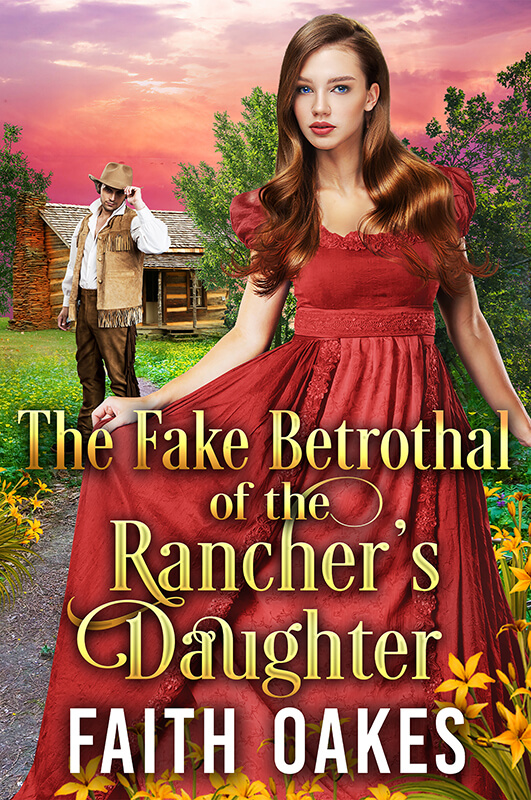
A Mail-Order Bride for the Widowed Sheriff (Preview)


Chapter One

The train was dark and stuffy, too many bodies crowded into too little space that left the air heavy. It smelled terrible, too, of bitter sweat and a dozen different perfumes that did nothing to hide the terrible smell. It had been like this since the train left the station a day and a half ago, and only got worse.

Henrietta Jones was lucky to have her own compartment. It was cramped, with two beds smushed against the corners and enough storage for three suitcases. No more. The window, although large enough to watch the scenery go by, refused to open. Or perhaps it wasn’t supposed to. This was Hettie’s first time on an overnight train.

Currently, she sat on one of the beds she had chosen as her own for this journey and listened to the couple in the next compartment bicker. One was a tall man with a fierce scowl. The woman, although quieter, looked no less menacing. They’d been arguing all day, their raised voices drifting through the train cabin for hours. Although Hettie supposed it was a source of entertainment, it was becoming tiring.

It almost made her wish someone else was using this compartment. With someone to share with, at least, she’d be able to hold a conversation.

Letting out a sigh, Hettie sank deeper into her bed. One hand idly played with the string of pearls around her neck, rubbing the largest between thumb and forefinger. You’ll dull the pearls that way, Mother had always warned her, and if they’re ruined, I can’t very well give them to you when I die, can I? It had all been said in a joking fashion, at the time. But then, Mother had fallen ill, and a year later, Hettie attended the funeral wearing those very same pearls. She’d barely taken them off since.

Idly, she wondered what her new fiancé would think of them. True, the necklace was chunky and a little tasteless, but it wasn’t just about how they looked. It was about what they meant to her. Hettie’s mind drifted after that, less concerned about her fiancé’s opinion on her jewelry choices, but more worried about what would happen once she arrived in Texas. After all, they’d only ever spoken by letter.

Still coming to terms with the fact that she was a mail order bride, Hettie wasn’t sure what to make of it all. She only hoped it all went as smoothly as she expected.

As she lay there, staring up at the stained ceiling, Hettie heard a voice echo from somewhere down the train cabin. Just another child acting up, she assumed, until the shouting continued. A chorus of bellows rang throughout the cabin, leaving her ears ringing.

On her feet now, Hettie felt her blood run cold. Was she imagining it, or was the train slowing down? Was that why everyone was panicking? Logic told her to peek into the hallway, fear told her to stay put. Pretty face twisting into a frown, Hettie inched toward the window.

The scenery, awash with the green grass and tall trees of the countryside, wasn’t flashing by as quickly now. It only confirmed her worries, and Hettie felt her stomach drop. They were nearing the journey’s end, but considering how long the journey was, there was still plenty of time left. Fishing her pocket watch from her dress pocket, she realized with a jolt that it was even earlier than anticipated.

So why were they stopping?

Now, even the couple next door had stopped fighting.

Just then, the train lurched. Hettie was thrown forward with a gasp, and her elbow knocked against the bedpost with a painful slam. A stinging ache licked its way up her arm as she landed on the bed, arms thrown out to catch her fall. Sitting up, she stared around with wide eyes.

Her suitcases had been thrown from the overhead storage. One had landed by the window, the lock snapped, revealing her collection of books. At least it wasn’t my clothing suitcase, she thought, only for a jolt to tear through her as she realized one thing. The train had come to a complete standstill.

Her arm protested as Hettie moved to scoop up the books that had spilled onto the floor. With the suitcase broken, she ended up tossing them all onto the unused bed. Truthfully, she was only trying to put off what really had to be done. She needed to investigate, and the thought made her stomach roll.

The train, which only moments ago had been echoing with voices, now fell eerily silent. So silent, in fact, that Hettie heard her own breath coming in quick, rapid gasps. Outside her compartment door, it was as if everyone had simply vanished.

Hauling herself upright, Hettie risked another look outside. The train was surrounded by lush green fields and tall evergreens, their needles shining in the afternoon sunlight. Once again, she jostled the window, but it refused to open. So much for that. She couldn’t see a thing anyway, and if something was wrong, she wasn’t privy to it.

Hettie turned just as the first voices reached her compartment door. Her heart jumped in her chest as a piercing howl rose up, so loud it seemed to come from right beside her. It shot through the silence, making her physically recoil, before ending as abruptly as it sounded.

Dogs didn’t sound like that. With a shudder, Hettie realized that it had been a person.

There were more voices now. First, a deep, rumbling man’s voice right outside her door. A second voice, little more than white noise muffled by the door, responded. There was a scuffle of feet and a thud against the door, a man grunting in pain before someone snapped, “Get him out of here!”

Feeling bile rise in the back of her throat, Hettie stepped away. It was no use, anyway. Whatever was going on out there, she was trapped. The room was hardly big enough for two people to sleep in, with nowhere to hide and certainly nowhere to go. If they decided to force their way in-

“Check every compartment,” a rough voice commanded. “I want a thorough search before we go.”

A beat of silence. Hettie wasn’t aware she had been holding her breath, not until it all left her in a breathless huff, her head spinning. She pressed her back against the window, feeling her pulse hammer against her ribs, wondering just what was going on but terrified to investigate.

The door jostled; a man growled. Then, the door shuddered open, squeaking on rusted hinges, and an enormous figure filled the doorway. He was tall, the swoop of his greying hair almost touching the top of the frame as he stepped inside. Although his build was slender, his fitted black shirt gave the illusion of bulk. When his eyes landed on Hettie, she realized they were a cold, slate grey.

Swallowing thickly, Hettie forced her voice to work. “Can I help you with something?”

A slow, unsettling smile spread across his lips. Despite being well-dressed, his hair short and neat, that smile turned him into something sinister. “Well miss, I believe you can. Got any valuables?”

Behind him hovered a blond man with wide shoulders and a nervous frown. “Sir? There’s a man causing a stir over in the second compartment, and I-”

“Then take care of it.” The blunt sound of his voice, the way he fixed the blond with that cruel stare, made it clear that he was the leader. The leader of… what, though?

Hettie was sure she didn’t want the answer.

When the grey-eyed man turned that unblinking gaze back to her, Hettie felt her entire body freeze.

“Nice pearls you have there.” His eyes roved across her body, lingering not on the pearls around her neck but her ample chest.

Despite wearing a simple traveling dress, that look made her feel slimy. Suddenly, she wanted a bath, just to forget the way his gaze had lingered on her.

“Got anything else in those suitcases?” the grey-haired man asked, jerking his head toward where they had fallen earlier.

“J-just books and clothes.”

“Then the pearls will do.”

He stepped forward. She stepped back. Her arm knocked against the wall, and Hettie winced but held her ground. Fear welled up inside of her, but she couldn’t give up these pearls. They had belonged to Mother, and they were the only thing of hers she had been able to take on this horrendous journey.

A deep frown marred his features and made him look even harsher than before. “Now, don’t be stupid, little girl. I’ve got ten men on this train, all armed, and we’ve already had to take out one man. Don’t think I’ll spare you.” He reached out, long fingers snapping around her wrist like a handcuff. “Give me the pearls.”

Hettie fought against his bruising grip. “They were my mother’s,” she snapped, twisting her wrist to try and grapple free. Yet he was far stronger than her, and her struggle only had him grinning in delight. Was he enjoying this? The thought made her sick, and in a moment of rage, she darted forward, sinking her teeth into the soft flesh of his hand.

With a yell, he let go, disgust twisting his features. “How dare you,” he snarled, curling his hand against his chest.

With a rush of spiteful satisfaction, Hettie saw she had drawn blood.

“I might have let you go,” he stated, voice dangerously low, “but now I’ve changed my mind..


Chapter Two

Hettie flinched back, preparing for a hit – or worse. Tears sprung to her eyes, but there was nowhere to go, nothing to do.

But the attack never came.

“Sir,” a voice murmured, and Hettie opened her eyes to see the same young bandit hovering by the doorway like a lost child. His eyes drifted to Hettie only for a moment before sliding back to his boss. “The Sheriff is here.”

Sir. Then the grey-haired man was the leader of this group. These bandits. Hettie swallowed.

The man swore. The roughness of his voice made Hettie flinch, but he was no longer interested in her. He turned his back to her, as if she were a forgotten toy, and stalked from the compartment without another word.

The blond followed dutifully after him, feet scuffing the ground.

Letting out a breath, Hettie allowed herself to sink to the floor. Her heart still thudded, her pulse roaring in her ears, but she managed a sigh of relief that made her whole body ache.

That relief lasted as long as it took to hear the first gunshot. It rang throughout the entire train, a resounding shot that left her ears ringing. Hettie scrambled to her feet with energy she didn’t know she had, a gasp leaving her lips. It had come from her left where the two men had gone.

Despite knowing better, Hettie peeked into the hall. Others had the same idea, it seemed, because all across the cabin, doors opened. Heads looked out, people murmuring between themselves. Some of the especially curious even stepped out into the hallway itself, their necks craning around…

Only to scatter as another shot pierced the silence. There were voices now too, especially the deep tenor of the grey-haired man’s shouting curses. Hettie saw him dart out of another compartment, his once slick hair now a mess around his angular face. He had a pistol held in one broad hand, sweeping it across the hallway as he searched with narrowed eyes.

That was when Hettie saw a flash of a dark sheriff’s uniform, the badge glinting in the sun. He squeezed off two shots – both missing – before ducking behind a door.

Within seconds, chaos erupted around her. People screamed, their shrillness filling the cabin. Passengers darted out of the way as more gunshots echoed – some ran back inside their rooms, some simply fled, hoping somehow to escape the confines of the train. A man fell at Hettie’s feet, his eyes wide, before he hauled himself upright and ran off toward the back of the cabin.

Hettie, frozen in place, simply stared at the scene unfolding. The young blond man had collapsed, clutching his leg. Another man grabbed his shoulder as blood seeped from between his fingers. Men poured into the hall, hollering over one another until individual words were impossible to make out. Vision obscured by the crowd, Hettie lost sight of what was happening.

As she stood there, feet rooted to the spot, it occurred to her just how lucky she was to be unhurt. Those bandits could have so easily hurt her. Or worse…

A man flew past, and she jumped, skittering aside to let him past. This man had a badge glittering on his chest. The deputy sheriff? He spared her a glance, brows furrowed, before darting along the hallway to the source of the fighting. “Everyone, stay inside your compartments!” he called, but Hettie was the only one left in the open anyway.

Eyes wide, she watched him go, and he joined the fray. Together, the sheriff and the deputy were a frightening force. Already they had taken out four bandits, the sounds of their gunshots ricocheting off the walls and echoing throughout the entire train.

Hettie felt her stomach turn as she watched the fight. Her feet refused to move, and no matter how desperately she wanted to look away, it was impossible. Eyes fixed on the sheriff and his deputy, Hettie felt her heart jolt with every shot. Each time, she expected one of them to be hit, and with each shot, her worry grew. Not for herself, because nobody seemed to even notice she was there, but for them.

Despite the worry tearing away at Hettie, it wasn’t long before the bandits knew they were losing. The grey-haired man, who had been keeping back from the worst of the fighting, sprinted down the hall with enough speed his feet skidded across the wooden floor. “Fall back,” he snarled, although he didn’t wait for his men to answer. Already he was making his escape, pushing past his own lackeys to get away. “This is a lost cause, so let’s get out of here!”

“You won’t get away with this,” the Sheriff called. The hall was too narrow and the fighting too thick, but Hettie caught the sheriff aiming his pistol at the last moment, just as the leader was about to slip away.

A gunshot, louder than the rest, shot into the hall. Hettie gasped as she saw the Sheriff stumble back, surprise flickering across his face. Someone had gotten to him first.

The distraction was enough for the leader to run, his feet pounding on the floor. His men followed – some unhurt, some bleeding, leaving smeared trails of red in their wake. One bandit shoved past Hettie. She tried to dart out of the way, but his shoulder still collided with her. He winced and hurried on, but he left a streak of blood across her sleeve.

Fighting the urge to be sick, she only watched them go.

Some of them were hurt, and the acrid smell of blood and gunpowder left a sour taste in her mouth. Swallowing, she fought down the urge to vomit. With the bandits gone, the hall was now empty, and she was the only one left standing there like an idiot.

The deputy knelt by the sheriff, but he waved the deputy’s help away. “It’s only a graze,” he snapped, peeling back his sleeve to inspect the wound. Hettie crept closer, if only to make sure he was all right, and his head turned up to look at her. He was attractive, perhaps in his late twenties, with messy blond hair and the beginnings of stubble growing on his chin. His eyes were dark, a deep brown that was almost black under the dim lights. By all accounts, he was handsome, tall and broad as he pulled himself upright, with wide shoulders and a slim waist.

“Are you all right?” Hettie asked, if only because it was the first thing she thought to say. “Those men, they tried to steal my pearls.”

“That’s what bandits do, I’m afraid.” It was the Deputy who answered, a young man with a shock of red hair and a boyish face. He looked far too young to be a Deputy Sheriff, but his smile came easily, and his eyes were kind. The deputy asked, “How about you? Were you hurt?”

“No. They tried to steal my mother’s pearls, but I wouldn’t let them.” Hettie couldn’t hold their gaze, head bowed as she played with a curl that had fallen from its bun. The Deputy was kind, but the intense stare of the Sheriff had her blushing like a schoolgirl.

The Sheriff quirked a thick brow, his dark eyes judging. “That was dangerous. You should have just given them up.” He stretched out his shoulder, wincing as the joint cracked. Blood trickled down his forearm, but he didn’t seem bothered by it.

Hettie felt annoyance rise in her chest. “They were my mother’s, and I wasn’t going to give them to some disgusting thief.” Arms folded, she scowled at them both. Although her parents had always taught her to be respectful of authority, she had also been taught to stand her ground, especially over things that mattered. “Anyway, I wasn’t hurt.”

“You could have been,” the Sheriff snapped. “Worse, even. People like them have no care of human life. Given the chance, they’d have shot you for those valuables.”

Hettie saw his name badge shimmer in the light. Pruitt. Funny, that was the name of her fiancé, the man she came all the way here to marry. As soon as the thought popped into her mind, Hettie was speechless. Her chest jumped, surprise rolling through her. Could it be…? Her lips parted, the question on her tongue, but she never had the chance to say a word.

Sheriff Pruitt cut in with, “You’re a brave woman, standing up to them like that, yet naive. You’re lucky we arrived when we did.”

A few people had risked peeking their heads from their rooms now. Likely curious now that the fighting had ceased, they wanted to know what was going on. Hettie couldn’t blame them, and besides, it gave her an excuse to move away from the Sheriff and his Deputy.

“Will the train continue its journey now that they’re gone?” she questioned, “I’m sure these people want to be on their way. I know I do.” A pause, her brows furrowing. “I’m supposed to be meeting with the sheriff of Hollow.”

“That would be me.” His expression softened, confusion flickering over his eyes. “Are you Henrietta?”

It should have clicked sooner, in all honesty. Hettie had no idea they were so close to Hollow already, hadn’t realized that tall, handsome man was her fiancé. When it finally clicked, the realization hit her like a physical force. He was even lovelier to look at than she had imagined.

“Sir, we should-”

“Jack, can you give us a minute alone? Go and check on the other passengers, please.”

The Deputy, his badge told Hettie, was Deputy Coffee. Jack Coffee. He nodded, shooting the Sheriff an understanding smile, before turning to address the frightened passengers. He gently began ushering people back into their cabins, murmuring reassurances as he went.

Pruitt – no, his name was Vincentran a hand through his thick hair. “You need to be more careful. What if I hadn’t arrived in time? You could have been killed.

Turning her head toward her own compartment, she gestured for him to come inside. It was still a mess, with her books sprawled across the spare bed and her suitcases lying in the middle of the room. She sat anyway, nudging the suitcases out of the way with her feet. “I know it was silly of me,” she replied with a frown, “but I wasn’t thinking. One moment I was alone and the next…”

“You were frightened,” he replied gruffly. He wasn’t anything like his letters made him out to be. The Vince Pruitt she had seen in those letters had been kind, if unsure. Straight to the point, but never cruel in his bluntness. He had wanted a wife mostly for his daughter who had no mother. Someone to care for his beloved little girl while he worked long hours at his important job. For her, it was about the security and the chance to live a quiet life somewhere peaceful. And about money, of course, although Hettie didn’t like to say so for fear of sounding selfish.

The Vince Pruitt she saw now was dour, his arms folded stiffly as he stared out of the dirty window. “The train will continue its journey once we ensure everyone is safe,” he said coolly. “Until then, may I suggest you stay inside your cabin?”

“There isn’t anywhere else to go,” Hettie replied instantly. She matched his glare with one of her own, her bright blue eyes narrowed. Sweeping long black hair over her shoulder, she tucked her legs onto the bed, boots still on, and rested her back against the wall. “I’ll wait,” she concluded with a sigh. “I’m sorry for causing you trouble.”

Vince pursed his lips, unconvinced by her apology. Yet, he shrugged, unwilling to push the matter, and strode to the door. “The bandits got away, but at least you’re unhurt. I hope we can say the same for everybody else.” With that, he stepped into the hall, closing her compartment door behind him.

Letting out a heavy breath, Hettie all but collapsed against the wall. It was cool against her skin, somewhat soothing the headache that had started to thump at the back of her skull. A part of her didn’t truly believe that it was over – she half expected the door to fly open, revealing more dirtied bandits in the hall. Of course, the door stayed shut and the train remained quiet, and it was only her own paranoia causing trouble.

It was a long while before the train shuddered back to life. When it did, Hettie was almost soothed by the rhythmic hum of it jumping into motion. Soon enough she would be in Hollow, settling into her new life with Vince Pruitt. The thought made her anxieties rise, only partially soothed by the knowledge the train was once again moving. He was handsome, certainly, but meeting him had caused doubts to surface. Had she made a mistake, coming here? Was it too much to hope that her new life was the idyllic lifestyle she wanted?

Eventually, worn out from the worry, Hettie let her head fall onto the soft pillow of the cabin bed. Yet even as she drifted off, those worries clung to the back of her mind. Somehow, she managed to drift off into a restless doze.

What felt like seconds later, she was gently nudged awake, bleary eyes blinking open. The train was at a standstill, and outside she was met not with nature, but a dark train station.

She was here.

***

Henrietta wasn’t what Vince had expected. She had held her own against bandits, which was far more than most men could handle. On the other hand, she was soft, too, in the gentle flush of her slender cheeks and the shy smile that graced her features.

He should have been annoyed at her for the way she acted, risking her life for a pearl necklace. It struck a chord, though, when she mentioned her deceased mother. Vince valued family above all else, and thus he understood the desire to keep the pearls close.

“The bandits got away,” he sighed, “but at least you’re unhurt. I hope we can say the same for everybody else.” He offered a smile, something he didn’t do too often, and leaned heavily against the wall.

Henrietta stared at the ceiling with tired eyes, and he couldn’t blame her. The journey wasn’t over yet, though, and he thought it best to let her rest. She was pretty when she was relaxed; her dark hair spilled over her shoulder, having come loose from its bun, and her cheeks were perpetually tinted a lovely pink. Not a flush, but a natural color that made her look vibrant. He had never seen her before, not even in a photograph, and Vince found himself enjoying the curl of her dark hair and the slender slope of her jawline. He had tried to avoid picturing Henrietta before now, not knowing what she looked like, but she was more beautiful than anything he could have imagined.

Shaking his head, Vince let out a sigh. Although it pained him to leave her, he had duties to attend to as the Sheriff. Duties he could not avoid. “Please, rest. I have to attend to the other passengers.” His gaze lingered a moment before he turned, offering her a reassuring smile. “Rest.”

“I don’t know if I can,” Henrietta admitted, but already her eyes looked heavy.

“It will do you a world of good,” he murmured, “and I will be back as soon as possible.” Slipping outside, Vince made sure to close the door behind him. The danger was over, but the dull throb in his arm was a reminder of what could have happened. He felt safer knowing that Henrietta was tucked away out of sight.

Jack met him in the narrow corridor. His eyes were somber, but he brightened upon seeing him. “So, Henrietta. I didn’t even realize this was the same train.”

“Neither did I,” he admitted, feeling a rush of embarrassment. “I should have realized it was Henrietta’s.” He knew she preferred Hettie, but calling her something so informal when they had only spoken through letters… it felt wrong, somehow. Too personal. Perhaps it was hypocritical, considering he insisted everyone call him Vince.

She wasn’t entirely what he had expected, either, although he couldn’t quite figure out if he enjoyed that or not. Henrietta was a spitfire, determined and stubborn, but he saw kindness there, too. Bravery in how she refused to give up her mother’s favorite pearls. Henrietta wasn’t the shy, demure woman he had expected, and he found himself intrigued.

Breaking him from his thoughts, Jack gestured to the rooms further down the cabin. “Nobody got hurt, thank God, although the children got quite the scare. Everyone’s fine.”

“We were so close,” Vince muttered, a scowl forming on his rugged face. It was his fault they got away, for being reckless enough to get shot. The pain, which had started to numb by now, was a reminder of that.

“We’ll get them,” Jack reassured, “but for now, you need to focus on yourself and your new fiancée.”

Jack was right. The deputy was wise beyond his young years, and Vince was thankful for having him around. His mind drifted back to Henrietta, still unsure of what to think of her. Would they get along? They hadn’t gotten off on good footing, which only made his nerves rise. Shaking his head, he addressed Jack. “I’ll take her home as soon as we get into the station. Can you take care of the rest?”

“Of course,” he replied.

Moments later, the train shuddered into action, the chug of the engine filling the silence. Now that they were on the move again, it was a good sign that things were over. For now.


If you liked the preview, you can get the whole book here


If you want to be always up to date with my new releases, click and…

Follow me on BookBub

A Scandalous Bride for the Rancher (Preview)


Chapter One

“Oh, Cat! Can you believe it? Only four more months until I become Mrs. George Staton III!”

It was the same conversation Catherine Brings had gone through with her employer’s daughter every morning, afternoon, and evening for the past seven months. The twenty-four-year-old, head housemaid responded with a warm, caring smile. “No, milady. It seems truly unbelievable that your marriage is almost here.”

Cat had started working officially for the Millers at the age of sixteen after her mother, Elaina Brings, had died unexpectedly. Elaina had been a faithful employee of the Millers for nine years as the housekeeper of Braddon Park in Richmond, Virginia. After Elaina’s death, the Millers took pity on Cat and hired her on as a kitchen maid.

“And you are truly blessed to have found such a perfect, wonderful man,” Cat added.

Margret drifted her eyes up to the tall bedroom ceiling. “Cat! George truly is a perfect, wonderful man. I have never loved another as I love my betrothed. He is handsome and charming and beautifully rich. He’s learning his grandfather’s business to take it over himself in a year!” Margret rose from her seat on the chaise lounge and spun in a circle, sending her satin skirts swirling about her. “Can you just picture it, Cat? Dinners and dancing and social events with carriages and trips overseas and our very own house on his family’s land! Oh! What a fantastic life I’m going to have!”

Margret spun herself into exhaustion as she flopped down on the chaise lounge, throwing her arm over her pale face. “Enough of whatever you are doing over there, Cat. Come sit and read me the latest gossip in the Richmond Whig.”

Cat had known Margret Miller nearly her entire life. Being six years older, Cat considered Margret as something like a younger sister. Of course, social status could never allow for such a personal connection, but Cat knew as much about Margret as Margret knew about herself, and possibly more.

“Cat! Did you hear me? I’m eager to know who the talk of the town is this month. I cannot go to Elizabeth’s party being the only one without any knowledge of what’s happening.” Margret’s golden curls bounced as she furrowed her brow and crossed her arms over her chest. “Elizabeth thinks she knows everything in this town. She thinks every man wants her and every woman wants to be her.” She shook her head, glaring down at her thumbs twiddling in her lap. “But not this woman. And not my man.”

Sensing Margret’s melancholy would soon lead into one of her usual self-pity fits, Cat set down her sewing and took her place on the floor in front of the chaise. Taking the magazine from the side table, Cat began to peruse with pretended interest.

“Alright, let’s see here. Ah, yes. First things first. The governor has approved expansion for farmers and cattle ranchers who wish to extend their properties.” Cat lifted her eyebrows. She had always been interested in the rural side of life. Her mother used to tell her stories of how father had worked day and night on the Brings family land to make it productive and successful.

Cat had always dreamed about how things might have been for their little family if her father had not died when she was only three.

Margret’s drawn voice pulled Cat from her daydream. “Cat, how many times must I tell you?” Glancing up, Cat caught sight of Margret waving her hand in the air. “None of that interests me. None of that will benefit me around the dinner table with Elizabeth and her guests. Read me something that actually makes a difference in conversation.”

Cat took a steadying breath, leafing through the magazine. “Isn’t this something?” Cat pulled the periodical closer to her face as she skimmed the writing across the page.

“What! What is it, Cat? Tell me, tell me!” Margret sat up.

“Here’s an ad for a mail-order bride. A rancher in Montana is looking for a wife….”

Margret’s loud cackle jerked Cat from her reading. “Oh, how wretched! Can you imagine someone responding to such a request? The woman would have to be mad with desperation to consider giving her life away to a man she never met clear across the country!” Margaret said. Cat sat perfectly still and silent. “Besides, he’s most likely old and terribly unattractive. I’m so lucky to have George. I don’t have to worry a single moment about dealing with such a situation as answering an advertisement for someone to fall in love with me.”

Though she did not show it, Cat struggled to keep her thoughts in check. Listening to Margret made the heat start to rise up her neck. She could feel her heart pound quickly.

“Cat! Don’t tell me you think the advertisement has some worth. I thought you a much smarter person than to fall for such absurdity.”

Realizing her thoughts were beginning to show, Catherine adjusted her brow and gave her usual sweet smile. “Don’t be silly, milady. I’ll never be one to marry. I have you to look after, and then, once you leave for Thornton Hall, I’ll be here tending to your family’s needs as I always have, just like my mother before me.”

Margret rose from her seat and stared down at her with a look of pity. “You and your mother have always been so good to me and my family. You truly are where you belong, Cat. I hope you never leave us.”

Cat continued with her smile. “Thank you, Lady Margret. I appreciate your kind words.” Knowing Margret spoke only out of a selfish desire for herself and her own household, Cat did her best to not let the mundanity of being “where she belonged” bring her spirits down.

“I think I’ll take a rest before supper, Cat. Can you please let Mother know? I don’t feel like traipsing downstairs only to climb them once more for my sleep.”

Cat rose to her feet, tucking the magazine in her cotton skirt pocket. “Shall I turn your bed down for you?”

Margret waved her hand in the air dismissively as she flopped onto her large canopy bed. “No need, Cat. Just do as I say, so I don’t have to talk to Mother.”

Cat nodded her head and excused herself from the room, closing the large oak door behind her. Leaning up against it, Cat closed her eyes and let out a long, deep breath.

Father God, please help my hurting heart. Help me to hold my tongue and keep a positive attitude.

With that, Cat made her way to the drawing-room to relay Margret’s message to the lady of the house.

As she descended the stairs, Cat could not help but clamp her hand on the magazine in her pocket. Her mind drifted back to the advertisement that had caught her eye. The idea of finding someone she could fall in love with brought hope to her suddenly weary soul. She had longed to have a love of her own ever since her mother read her the story of Mr. Darcy and Elizabeth Bennet.

“Cat?” A familiar, elderly voice broke into Cat’s memories. Glancing across the foyer, Cat’s gaze landed on the matriarch of the estate.

“Good afternoon, Lady Miller.” Cat slipped her hand from her skirt pocket and crossed her arms at her waist.

“Is everything alright, dear? You look a little flushed.” Corliss Miller sashayed toward Cat. “You were standing there as if you were lost in deep thought.”

Cat quickly adjusted her facial features to mask her true feelings. “Forgive me, milady. I did not see you. Yes, everything is just fine. In fact, I came down to let you know Lady Margret won’t be joining you for tea this afternoon.”

Corliss lifted her delicate fingers to the chest area of her petite frame. “Oh, my heavens! Is she alright? I hope she isn’t coming down with something.”

Cat smiled at her mistress. “There’s no reason to worry, milady. Lady Margret simply needed to rest her eyes. She told me to tell you she will be down for supper this evening.”

Cat had always been grateful to Corliss Miller. Lady Miller had been the one to promote Cat to head housemaid, which included the charge of caring for the only daughter of the Miller family.

Corliss patted her graying, auburn hair, causing some loose tendrils to fall from their tight bun at the nape of her neck. “Hmm. I always worry when she strays from our daily routine. But I suppose you know her better than any of us.” The lady of the house let out a deep sigh before turning to the drawing-room behind her. “I’ll be reading in the drawing-room until teatime.”

Catherine remained steady and sure as she replied, “Linny will bring in your tray momentarily, Lady Miller.”

Corliss waved her hand in the air with gratitude and smiled over her thin shoulder. “Thank you, my dear. I have no doubt you will keep everything in line. You’re becoming more and more like your mother every day.”

Catherine’s breath caught in her chest, and her eyes stung from happy tears. It was one of the kindest comments anyone had ever made about her. And it meant even more to have them come from the very lips of the woman who knew both Elaina and Cat. Cat cherished her mother and missed her greatly, and she had come to cherish Corliss Miller in a motherly way as well.

Though she would never truly experience the mother-daughter relationship from the days of her past, Cat cherished these small moments as treasures for her lonely heart.

***

A few weeks had passed since Cat’s discovery in the Richmond Whig. She did not have many chances to dwell on the daydreams the advertisement had stirred up in her. Usually, she could count on some alone time when she was taking care of the wash or lending a hand in the kitchen or mending Margret’s clothing in the evening, but after a surprising announcement from Linny that she was leaving service to get married, Cat suddenly added more duties to her regular responsibilities. On top of tending to the guest rooms and the family rooms and fulfilling the duties assigned by Mrs. Holmes, the housekeeper, Cat continued her responsibilities of caring for Margret Anastasia.

“Cat! Cat!” the panicked and irritated voice of Margret screeched across the second-story floor of Braddon Park. “Cat! For goodness sake, where are you girl? Cat!”

Cat bounded up the steps of the grand staircase with her long legs. She grabbed a hand to her cap to keep it from slipping from her pinned-up hair. Cat had been taking a much-needed break at the servant’s table that had turned into a slouching slumber in her seat, when she had been awakened by the ring of the servant’s bell connected to Margret’s pull cord in her room. Cat had not planned on losing track of time, but with the new duties and the constant bending to Margret’s every beck and call, Cat felt she would never catch up.

Reaching the mezzanine, Cat quickly adjusted her apron before fixing a smile on her face. “I’m here, milady. Forgive my absence.”

Margret threw her lanky arms in the air, her voice rising to a high-pitched squeal. “Just where have you been, Cat? I’ve been ringing for you for nearly a fortnight. I cannot believe you forced me to cry out for you. You know father detests a woman raising her voice in the home, especially a lady-in-waiting such as myself. He says if George ever heard such a sound coming from my mouth, he’d break our betrothal off in an instant.”

Cat resisted the urge to roll her eyes at Margret Anastasia’s dramatics. She knew Margret’s outburst was simply a cry for attention.

Margret was a selfish girl. And, deep down in Cat’s heart, she knew she would always be one, no matter the situation of others around her.

“Again, Lady Margret, I apologize for my tardiness. I lost track of time in the servants’ kitchen working on the mending and the washing.”

Margret spun around, sending her royal blue, satin skirts into a swishing motion. “Excuses! Nothing but excuses from you, Cat. That’s all I have been hearing for the past week.” Margret’s crisp blue eyes peered over her thin shoulder and narrowed at Cat in a serpent-like manner. “You do know, Cat. I could call for father right this instant and tell him to fire you.”

A heat of nervous fear rushed over Cat, and she ducked her head. “Yes, milady.”

Margret turned her focus out the large, picture window and waved her hand dismissively. “Never mind, Cat. I don’t need you here with me after all. I’d rather be alone now.”

Cat nodded as she turned to leave. Reaching the door, she heard Margret’s final warning. “Don’t forget what I said about father, Cat. He would fire you without question.”

Cat closed the door behind her as her mind raced. I must be careful. I wouldn’t know what to do if I was ever fired. I have no place to go. No family. No home. Nothing to my name.


Chapter Two

“The sun’s goin’ down, Steve. Got to be gettin’ home to the wife,” said the wrangler from his horse to the young rancher kneeling beside the fence line. “Eh! Some of us got folks waiting on us, here.”

Without turning his head, twenty-nine-year-old rancher, Steve Priddy, waved his free hand in the air, gripping the nearly repaired barbed wire fence.

“Ehyep.”

“You know, you got a few waiting on ya, too,” the man added.

“Thanks for your help, Lou. See ya in a few days.” Steve was aware of what he had waiting for him at home. He did not need an old friend reminding him every time he worked past sundown.

The wrangler tipped his hat before turning the reins. “I’ll be seein’ ya, Steve. I’ll send Jenny over sometime this week to help out Honey.”

Steve twisted on the wire with one last frustrated motion        before rising to his feet. “My sister is doing just fine. Jenny can           just stay at home. I’m sure there’s plenty to do around your place.             No          sense in coming to the ranch. Honey’s got it all cared for.”

Steve kept his gaze strong and hard at Lou. It was not that he didn’t appreciate the kindness of Lou and his wife. Steve just did not feel any need for anyone to waste their time on his family. They were fine. They were doing just fine.

“Alright, Steve. All right.” Lou turned his horse and headed down the road.

Steve sauntered to his trusty steed that was waiting at the large oak tree. The large gelding glared at him.

“Quit looking at me like that, Branson. I’m sorry it’s so late. I’m finally ready to go.” Steve pulled a canteen from his leather saddlebag and took a long swig of water. He wiped his mouth with his sleeve, slipping his empty canteen back into the bag.

He took a last look around before getting up into the saddle. He owned the largest herd of cattle within three counties. The Lord had been good to him over the years, but it didn’t make up for all He’d taken from Steve.

A few miles of travel later, Steve reached the moonlit two-story log cabin that sat on his land. Soft, candlelight burned in the main floor windows revealing two figures sitting side by side at a table.

“I told her to stop waiting for me to eat,” Steve grumbled under his breath. The air had turned colder while he rode. Cursing himself for not grabbing his thick coat, he dug his heels into Branson’s flanks. “C’mon boy. I’ll get you some fresh hay before turning in myself.”

After finishing in the stables, Steve pulled the large double doors closed and marched heavily toward the wrap-around porch. A hard breeze whipped through the air, and Steve quickened his pace. With his head lowered, he barreled up the steps and shoved open the large front door.

“Dada! Dada!” Steve’s young son smiled up at him from his seat at the table. “Home! Home!”

Steve closed the door behind him and tossed his hat onto the hook on the wall. As he moved to the fireplace, where a warm fire crackled, his son continued to jabber excitedly from his seat at the table.

“You know, it wouldn’t hurt you to acknowledge your son who is just excited to see you,” said a beautiful, blonde-haired young woman, as she tore a piece of bread from the slice on her plate.

“Don’t start, Honey, please. It’s been a long day, and I’m really tired.” Steve hunched on the edge of his rocking chair that had been pulled close to the fire. “I already got an earful from Lou. I’d rather not have you coming at me too, little sister.”

The boy’s voice carried through the chilled cabin as Steve’s sister carried on with her lecture. “Knowing Lou, it was probably an earful you needed to hear.” Honey turned and smiled at her nephew beside her. “Isn’t that right, Tommy? Yes. Yes. You are a sweet boy.”

Steve could not take the noise any longer. “Honey! Just take     Tommy to bed! It’s way past his bedtime!”

“I’m still eating, Steve,” she said. Honey always seemed to find her stubborn streak when it annoyed Steve the most.

“I told you that you don’t need to wait for me to get home to start eating. You never know when I’m gonna be home.”

“But we want to wait for you, big brother. We enjoy your company. When I’m done eating, I’ll take Tommy and put him to bed.”

Steve stood up with a sigh. “Why must you always go against everything I tell you to do?”

Honey glanced up from her plate and leveled a strong gaze at her tall brother. “I don’t go against everything, Steve. I listen to you practically every day, but when you get in one of your moods, I decide to do what’s best for this family instead of what’s best for you and you alone.”

Steve crossed his arms over his burly chest. “One of my moods?”

Honey dabbed her mouth with her napkin and set it on the table beside her empty plate. “One of your moods, Steve. Like the mood you are in right this minute. You get like this when things aren’t going your way or when something happens you don’t particularly agree with.”

Steve stared long and hard at his sister. Even though she knew how to stir up his fire when he got complacent, and cool his annoyance when it flared up, Honey needed to learn her place. She was still young and had so much to learn about life and caring for a home.

“Give your dada a hug and a kiss goodnight, Tommy. It’s time to go to bed.”

Steve’s two-year-old son wobbled on his chubby, little legs across the cold, planked floor to Steve.

“Nite nite, dada.” Tommy waved his arms up in the air.

Steve took a deep breath and relaxed his shoulders momentarily to show his son some love. “Goodnight, Tommy. Sleep well.” Steve lowered down to one knee and wrapped his arms around the little strawberry-blonde-haired boy. “Now go on with Aunt Honey.”

“I love you, dada.”

Steve patted Tommy’s head as he turned him toward the staircase where Honey stood waiting with open arms.

“C’mon, sweet boy. Let’s get you into bed.”

Tommy ran over and jumped into her arms. Steve watched as the two interacted with complete love and affection. A slight twinge pinched at his heart. He turned around and marched back over to his rocking chair to get more heat to warm his cold body.

What’s wrong with me? He’s my son. My only child. I’m truly blessed to have such a sweet angel for a son. Steve listened as Honey prepared Tommy for bed. He dropped his head in his hands. Why does he have to remind me so much of her? It hurts so bad. I miss her so much!

Cora Ellen Priddy had been unlike any woman Steve had ever known. She was kind and selfless and gave everything she had to make sure everyone had everything they needed. Cora made sure they knew they were loved and cared for. She knew how to cook and clean and sew and take care of a homestead without complaint or disgust. Cora was the greatest woman Steve had ever known, and he had loved her with every fiber of his being.

And when Cora left the earth giving birth to their son, Thomas James Priddy, Steve’s soul had left with her. He couldn’t believe the Lord would give him such a wonderful woman, only to take her so quickly from him. They still had so many years left to share, so many children to create, so many memories to make their own.

It was why his young sister had moved into the large cabin. Steve had built the house with his own two hands. He had built it for Cora. Every inch was exactly how she had wanted it to be. But when she left him with a newborn son, Steve had lost more than the sense of being a husband. He had lost all sense of being a father.

A clatter in the small kitchen jerked Steve from his memories.

“You know, it’s okay to tell your son you love him. There’s nothing wrong with letting your only child know you actually care.”

Steve’s shoulders tensed, and his jaw clenched. He stared into the flames.

“I don’t think Cora would be happy with the father you’ve turned out to be. I doubt she would want you to treat Tommy with such cold, unfeeling emotions. I…”

Steve jumped up from his chair, baring his teeth at his sister.  “Cora’s not here, Honey! She hasn’t been here for two years!”

Honey continued to clear the table. “No, she’s not, Steve. And yes, she hasn’t been. I thought you would have realized it by now.”

“Realized what, Honey? That I have no wife? That the woman I loved is gone and never coming back? That when I look at my son all I see is Cora!” Steve felt his heart pounding in his chest. He felt his legs getting weaker by the second.

“Yes, Steve. Our Cora is gone. But life is still going. It’s time you start letting the past go and start moving toward your future. Or at least start living in the present.”

Steve backed himself up to the large chair and dropped his heavy body down, holding his head in his hands.

“There’s so much more living you need to do, big brother. Tommy is growing up every day. He wants to spend time with you. He wants to learn from you. He wants to love you.”

Steve shook his head. “Stop, Honey. Just stop.”

Honey wiped her hands on her apron, crossed over the floor, and lowered to her knees beside him. “It’s time to start loving again Steve. It’s time to start living again.”

Steve could not listen to her any longer. He had endured a long, hard day of repairing fences. He had listened to his old friend lecture about staying away from his family. He had seen his young son. Even if he was grateful for everything Honey did for the family, she grated on his patience at the end of the day. She was too young to understand his pain.

Without another word, Steve pushed up from the chair and headed for his bedroom behind the staircase.

“Where are you going?” Honey’s voice called out from the floor.

Steve did not miss a stride. “I’m going to bed.”

“But we’re not done talking.”

“We are for tonight, Honey.” Steve could hear his sister’s protest, but he did not let it stop him. He wanted the sanctuary of his bedroom. He wanted the quiet of sleep.

The next morning, he found Honey standing over the large, four-burner wood stove attempting her hand at breakfast. Her heart was as big as the Montana sky, but Honey’s knowledge of housekeeping and tending to a family was spare to say the least.

“I told you there’s no need for making big meals anymore,” Steve grumbled out as he walked past her to grab a cup hanging from a nail in the wall.

“Well, good morning to you, too. It doesn’t hurt to at least try. I know I’m not the best, but at least I’m willing to change things around here.”

Steve poured himself a cup of hot, black coffee. He needed as much fuel to get through the day as possible. “Please, don’t start this again, Honey. Let me get this down before you come at me.” Steve walked slowly to his chair at the table and slid into the seat.

“I’m not starting, big brother. I’m continuing. You didn’t let me finish our conversation last night.” Honey set down a basket of day-old biscuits in the middle of the table. She poured her own cup of coffee and joined her brother at the table. “Here.” She reached into her skirt pocket and pulled out a slip of paper.

After cringing from his bitter sip of coffee, Steve glanced at the parchment. “What’s this?”

“It’s an advertisement,” she said.

“What kind of advertisement?”

Honey shrugged her shoulders. “It’s an advertisement to get you a new wife.”

Steve’s eyes widened. “Honey! I don’t need a new wife. And, if I did, I wouldn’t advertise for one!”

Honey responded calmly. “Yes, you do. And there’s nothing wrong with seeking a wife through the post.”

Steve jumped up from his seat. “Don’t send that advertisement out. Do you understand me?”

Honey sipped her coffee.

“Honey! I’m serious! Don’t send it! I don’t need a wife! I don’t want a wife!”

Steve grabbed his cup and a handful of biscuits and turned.

“Where are you going, Steve?”

“I’ll eat these in the tack room,” he said.

He shrugged into his coat, slammed his hat on his head, and stomped out the front door into the brisk Montana morning air with his small breakfast in hand.

God, please help me to have a better attitude today. Help me to find the patience I so desperately need. 

Steve tilted his head to the sky. “Help me, God! Somehow. Some way. Just please, help me!”


If you liked the preview, you can get the whole book here


If you want to be always up to date with my new releases, click and…

Follow me on BookBub

Taming the Rancher’s Lonely Heart (Preview)


Chapter One

A cool wind blew up from the west, chilling Diana to her core. She supposed it was appropriate for the occasion. The whole town had turned out for Papa’s burial. She wanted to cry, but she couldn’t break down in front of all these people. Her father deserved the dignity of a proper funeral. When she got back to the silent house attached to the smithy, she could fall apart all she wanted. No one needed to know.

Papa deserved dignity at his funeral because he hadn’t found it in death. Sheriff Harris had been kind and told her he’d hit his head, but Diana knew the truth. Papa had been as good to her as he could be, but he had his demons. His horse had thrown him, it was true, but he’d landed on soft ground. A sober man could have gotten up again.

She pushed her resentment from her mind. She had little right to judge him, and he was past any hope of reform by now. All she could do was grieve and try to go on as best she could.

Reverend Watts, who had buried Diana’s mother, bowed his head as Papa’s casket was lowered into the grave. “Let us pray.” His voice was as cold and cutting as the wind.

Diana bowed her head with the rest of the town as Reverend Watts spoke in measured tones about her father. Papa was the last in a long line of Millers in Dickson, all well-respected practitioners of their trade. If Reverend Watts knew Papa had been the town blacksmith, he didn’t say so. Not in so many words, anyway. The rest of the town knew. It had been Papa who’d mended their wagon springs and shoed their horses, who created the fine iron fences around the homes of the wealthy, and who made the sharp, reliable hunting knives for the rest of the men. Smiths might be a dying profession in New York City, but upstate where the real business of New York was done, smiths were still in great demand.

That knowledge stiffened Diana’s resolve and helped her to keep her composure through the long burial service, even as the sexton’s assistants shoveled dirt over the simple pine box she had chosen for him. Diana and her father were frugal people, and no amount of sniffing from the carpenter was going to change that.

It was only when the last of the dirt had been replaced, lying in a cold heap over her father’s remains, that Diana felt comfortable leaving.  The mound would settle soon enough, and she could come back with flowers for both Papa and Mama in the spring. For now, the grave would have to suffice as it was.

She walked the long trail back to the forge and house alone. None of the townspeople had thought to stay with her, and to be fair, she would have been poor company. She valued the silence at a time like this. Papa’s death weighed heavily on her, but the chirping of the occasional bird overhead and the bright yellow of forsythias struggling to return to life soothed her.

She had little enough to look forward to in the small house attached to the smithy. The familiar routines of hearth and home seemed foolish now.  What was the use of lighting the fire and cooking for one? She groaned at the thought.

You may as well get used to it. This is the life you have now. Her reasonable self gave the rest of her a little shake. Perhaps once she’d had other options, but she’d turned down proposals from both of Dickson’s single men in favor of caring for Papa. It had been the right choice, the only choice, but as the snow crunched under her feet, she couldn’t help but wonder what was left for her.

I’ll figure it out. She wasn’t exactly helpless. She had the house. She had the smithy, and while she was no blacksmith, another was sure to come to Dickson, eventually. In the meantime, she might be able to sell some of the manufactured steel items coming in from Connecticut or Massachusetts. None of them were as good as handmade goods, but a customer would take what he could get in a pinch.

By the time she made it back to the house, she thought she might have the beginnings of a plan. She needed to flesh it out. Papa had been frugal in his ways when he was sober, but he could get carried away when in his cups. He couldn’t bear to turn people away, either—he’d trade services before he’d tell someone no. Everything hinged on just how much capital she had to work with.

She’d hoped to have some time alone to go through the finances and see what she might make of them, but she soon realized it wasn’t to be. She recognized Reverend Watts’ buggy right away, having only just seen it. Sheriff Harris’ horse stood beside the carriage, a feed bag strapped to his face. The presence of another horse, this one entirely strange, made her heart catch in her chest.

Somehow, she doubted the sheriff had found relatives on either side willing to take her in.

After a moment of resentment toward the people who could not leave her to her grief in peace, Diana realized that while she saw the carriage and she saw the horses, she did not see the people associated with them.

She took a deep breath. While she had the right to expect her privacy at a time like this, Dickson was a country town with country manners. People often felt free to let themselves into a home, especially in March when the weather could be so unpredictable. She could not afford to lose friends by yelling at them, not now.

She kept her head bowed as she mounted the plank stairs to the front door and let herself in. She found the sheriff and Reverend Watts in the parlor with a man she’d never met before. The stranger was of average height with a drooping, thick mustache. He wore a red vest under his coat, as though today was a festive occasion.

He also smoked a cigar, in a stranger’s house.

Sheriff Harris took off his hat. “Miss Miller. Let me say again how sorry I am for your loss. I know it was a sudden thing and very upsetting for you.”

“Yes, of course.” Diana glanced around at the familiar items in the parlor. She’d seen them every day when she went in to dust them, although she rarely spent time in there. Papa hadn’t put much stock in formal entertainment and had essentially left it as it was when Mama died. Still, Diana liked to keep it tidy so she couldn’t help but notice how a few things had been moved. Mama’s few books had been shoved out of their places on the shelf and stacked on a table. The lamps had been moved, and an end table had a drawer still partially open.

“Is there something you may have been looking for, that I can help you find?” She struggled to keep her voice neutral. What kind of civilized men went pawing through other people’s homes, especially after a funeral?

“The books for the smithy would be a good start.” The stranger wrinkled his nose at her. “I assume you know how to read well enough to know which ones they are, yes?”

Reverend Watts stepped between Diana and the stranger. “Mr. Ormsby, there’s no need for rudeness. A simple question would have sufficed.”

“She is a trespasser upon my property, and I want her removed this instant.” The stranger, Ormsby, waved a hand as if sweeping Diana out of her house.

“This is my home, sir, and I’ll thank you to leave it at once.” Diana pointed toward the door.

Sheriff Harris cleared his throat. “Er, well, you see, Miss, it seems that’s not exactly the case.”

Ormsby curled his lip, took a drag from his foul cigar, and blew smoke into her face. Diana kept her head up and didn’t flinch, even though the smell was odious.

“It seems your father—well, I hate to speak ill of the dead, Miss, but he had his problems. And he was putting those problems on full display the other night at Sarah Gladshaw’s house.” Harris tugged at his collar.

Diana knew just enough about the goings-on at Sarah Gladshaw’s to know she didn’t want to know any more. “I see. So, he was… he’d been drinking. He’s been grieving Mama’s death for nineteen years.”

“Time enough to get over it, don’t you think?” Watts curled his lip.

Harris glowered. “Far be it from me to chastise a clergyman for casting judgement.” He softened as he turned back to Diana. “It seems he wasn’t just drinking, ma’am. He was also taking part in a bit of a game, too.”

Watts snorted. “And here you said you couldn’t possibly marry. Someone had to stay home and take care of your father.  You certainly didn’t excel in that department, now, did you?” He rolled his eyes. “You couldn’t keep him from the demon rum, you couldn’t keep him from gambling, and you couldn’t keep him from making a miserable end facedown in the snow.”

Diana’s breath caught in her throat. Everything Watts said was true, but she’d done everything in her power.  A daughter could only do so much.  “I do believe he had several outstanding bills with you, Reverend. You can feel free to settle up before leaving.”

Watts gasped, hand to his chest. Ormsby let out a little chuckle. “She’s got spirit, I’ll give her that much.”

Harris managed a little grin. “She’d have to, to keep a roof over their heads all these years.” Then he sobered again. “The problem is, Miss, just before he passed, your father and Mr. Ormsby here got into a game with fairly high stakes. Mr. Ormsby’s farm in Maine against Mr. Miller’s house and smithy here. And well… your father lost.”

Diana swayed on her feet. Only the memory of her father, of the good times they’d had in this place, kept her upright. “That can’t be right. He’d have had no use for a farm in Maine. He’s never tried to grow a crop in his life.”

“Not my problem, I’m afraid.” Ormsby shrugged. “I’m thinking I’ll shut down the smithy. No one needs a blacksmith anymore, anyway. I’m going to turn the building into a saloon and the house into a hotel. The way I see it, Dickson needs a respectable place for travelers to stop for a night. And a man needs a place to stop for a drink that isn’t a house of ill repute, too.”

Watts sucked in his cheeks. “Must you? There’s a lady present.”

“A trespassing lady. Your father may have had his faults. He may have been as drunk as a lord. But he signed that deed over fair and square. I’ve been patient because of your situation, but I’m sure you heard me mention the need for respectable lodging.” Ormsby raised an eyebrow. “Right. Now you can just gather your things and get.”

Diana clutched at her neck and turned to Bowen. “This can’t be legal. Sheriff, tell me there’s something I can do. My father was so drunk he probably couldn’t see straight.”

“Well.” Harris inhaled sharply. “There’s definitely an argument to be made. I can see where you might have a chance, but you’d need one heck of a lawyer. And here’s the thing, Miss. The only lawyer we’ve got in Dickson—well, he’s just not that good. And I’m pretty sure he was born when they signed the Constitution. I’m not saying he’s bad, but…”

“But I wouldn’t trust him to handle the will of a person with no estate.” Watts sniffed. “You’re welcome to try your luck, but the other side of pressing a lawsuit is that lawyers cost money.”

“And money, my dear, is something you don’t have. I own this house, so you can’t borrow against it. I own the store, so you can’t borrow against that. You can sell off all the furnishings, you can sell off all your mama’s jewelry, and it still won’t get you enough to buy someone to plead your case in front of a judge.” Ormsby blew smoke in her face, again. “That deed is legal, no matter how much whiskey your daddy drank before he signed it. Get to packing.”

“I’d get to it.” Harris wouldn’t meet her eyes. “You can stay with me and the missus, for a couple of weeks, anyway. Until you land on your feet.”

Diana turned on her heel and headed for the stairs. She didn’t have much choice. She was going to have to stay with Harris, at least until she figured out a course of action.

As she rushed from room to room, gathering everything her family had ever owned, she bit her tongue to force back the tears. She couldn’t remember a time when she’d felt so helpless, and then this Mr. Ormsby had shown up and suddenly everything in her life was gone.

She gathered her property and put it into the pastor’s carriage, without regard for packaging or propriety. She had little choice. Anything that made it back into town would probably have to be sold.

Before they left, she turned to Mr. Ormsby. “I’ll have a receipt, if you please.”

“You aren’t in a position to be demanding much of anything, Miss Miller.” Ormsby hung his hat on her father’s favorite peg.

“I won’t be having any funny business after the fact. I’ll have a receipt, witnessed by these gentlemen, that I did vacate the premises at the appropriate time.” She straightened her back and waited, hands loose at her sides.

It was such a little thing, but Diana had kept her father’s books since she’d been a small child. She knew to get and give receipts. This Ormsby fellow struck her as a scoundrel, and she’d already lost everything to him once. She wasn’t going to leave herself vulnerable again.


Chapter Two

Cole paused as he tossed another bale of hay down to Gus and Will, who waited down below. Thanks to good planning on his father’s part, he could see the entire ranch from up here. He had a view of every pasture, every bit of grass, every stream, and every barn. The Badlands loomed in the distance, painted in colors more beautiful than any painter back east could have imagined by the rising sun. The only sign of human life had been built by Cole’s father, or by Cole himself. Sure, the work was hard and the hours long, but a view like this made everything worth it. Father always said so, anyway.

“Would you get on with it?” Gus looked up at him with a big grin. “We still got to get our feed on!”

Cole chuckled and threw another bale down to the waiting men below. None of the other ranch hands would talk to him quite that way. For them, Cole was the guy holding the purse strings. They’d been here for a while, most for years, but they still had a fear of being let go. The Dakota Territory wasn’t so crowded that they could count on finding work right away.

Not that Cole would fire someone for a little good-natured ribbing. He wasn’t that kind of guy.

Gus was different. He’d come out west with a whole bunch of orphans from all of those packed, dirty places back east. Cole could still remember the day when Father had brought him back from town, shivering and terrified and so skinny he might have been a skeleton.

No one would ever know Gus had been one of those half-dead kids from the East to look at him now. He’d grown into a tall, strapping man, more of a brother to Cole than a hired man, and he had no problem giving Cole grief when Cole got distracted.

“Yeah, yeah.” Cole laughed as he reached for another bale. “Brick’s got breakfast duty today, so I don’t know why you’re in such a rush.”

Groans rose up from the ground beneath him, almost indistinguishable from the cattle Freddy, George, and Hank were bringing out for their first meal. Sure, the beasts could feast like kings out there on grass and whatnot. Plenty of ranchers, especially the newcomers, did just that. One of these days they’d lose half their herd or more to a cold snap and Cole would laugh all the way to the bank.

“If you’d told me Brick was cooking today, I’d have taken my chances with the cattle feed.” George made a face and clutched at his stomach. “I heard he got run off of his last job for making everyone sick with one meal!”

Cole climbed down from the hayloft. He laughed just as much as the rest of them. “Pretty sure he didn’t want to waste the eggs, George.”

“Instead, he near wasted ten men.” Freddie glared toward the house. “A darn shame.”

“Good thing we don’t have eggs around here.” Cole kept an eye on the cattle as they trotted obediently into the pen where they would eat.  He narrowed his eyes at the herd. The Heggarty Ranch wasn’t the largest in the Dakota Territory at only five thousand head, but he was sure he missed a familiar face or two. Of course, a man couldn’t be certain, not this early in the morning and not with so many faces.

Father had only had two thousand head of cattle, back when the fever had taken him.

Cole wouldn’t think about it, not right now. He had too much to do.

“I wouldn’t mind having eggs. And some chickens, now that you mention it.” If Hank noticed the missing cattle, he didn’t say anything about it.  He just scratched at the stubble on his tanned cheeks and headed indoors.

“Chickens are too much work, and they attract foxes. We’ve got enough trouble keeping watch over the cattle. We can’t spare the time to go chasing off after chickens too.” Cole remembered the things his mother used to do with eggs, or the occasional stewing hen too old for laying. Of course, she knew what she was doing in the kitchen. Cole did not.

He joined the rest of the hands as they headed in for breakfast. Brick had rustled up some sausage from somewhere. Cole didn’t know where it had come from, but breakfast smelled better than the gravy Cole himself had made for yesterday’s breakfast.

The biscuits, on the other hand, left a lot to be desired. They hadn’t risen, at all, and turned out to be doughy lumps in the gravy. All in all, the whole mess was about as appetizing as one of the stalls after a long night. Even the coffee smelled off.

It wasn’t like they could afford to do anything but choke it down. None of them could do any better, and at least they knew it would fill their bellies.  Dinnertime was a long way off, and they’d be doing back-breaking work in the meantime. They needed the fuel.

He poked at a misshapen lump in the gravy. When it didn’t poke back, he was almost surprised.

“Brick, where the heck did you learn to cook?” Will grimaced as he swallowed a spoonful of the vile goo. “Tell me the truth. Was it in Purgatory, or at the very gates of Hades itself?”

“Go on, let’s see you try to do better.” Brick didn’t get mad. It wasn’t as if he didn’t know how bad the chow was. “Remember that time you served us meat so rare it was raw?”

“It was my first time cooking meat! What did you expect?” Will pressed a hand to his chest, cheeks turning red even under their light coating of dust.  “It’s not like they teach fine cooking at the Olathe Lutheran School.”

George hooted with laughter. “Can you imagine? Cooking in school! Hey Cole, when are you going to bring some good woman on to do the cooking around here? I know you’ve got to be just as tired of the chow as the rest of us.”

“Ain’t that the truth.” Cole didn’t bother to hide it. The only difference between them and him was where he slept, and even Gus had a room in the house. “I’ve asked around in town for someone looking for work, but so far there haven’t been any takers. There are two ladies in town.  Missy Montgomery, who’s got plenty of work on her hands as the pastor’s wife, and Widow Johanssen, who’s about ninety years old and doesn’t speak English. I’m pretty sure her hands are too sore to cook for herself, never mind the bunch of us.”

“And let me guess, you’ve been checking up on her and making sure she’s got enough provisions.” Gus shook his head, smiling.

“Well, it’s only right. Someone has to. I’m sure Pastor Montgomery does the same, but you know she helped take care of Mother and Father when they had the fever.” Cole sat back with a little smile. No one could shame him for looking in on an old lady.  They could try, but they’d never succeed.  “There’s no harm in it. She’s earned a little care, don’t you think? But she’s definitely in no shape to keep up with the likes of us.”

Brick cleared his throat. “Well, I’ve got something you might want to look into if you want to be able to keep looking in on your friend there.  We lost another ten head of cattle last night.”

Cole could barely swallow his coffee past the lump in his throat. They’d lost ten last week, and twenty the week before that. Sure, Cole had a decent sized herd, but every missing cow still meant money out of his pocket.

“You’ve got to be kidding me.” Hank scowled at him. “That’s over thirty-five hundred dollars just walked on out of here!”

Cole could speak now. “You think I don’t know that?” he demanded. “That’s obscene. That’s more than most people’s pay. That’s…” He wiped at his face. “But it shouldn’t be happening. After that first time, we kept them penned up at night. I thought at first it might be the native folks—my father had trouble with them when he first came out here.”

George, whose mother had been Lakota, shook his head. “Nah, they don’t come in this far. And they’re not going to mess with cattle. They’ve got no interest in ranching.”

Cole nodded. “Right. That’s why I figured it wasn’t them pretty quick. I’m kind of out of options, though. If it was an animal, there would be signs. Claw marks. Blood. Cattle yelling in the middle of the night, that kind of thing.”

Will scratched his head. “What kind of an animal drags off ten cows at once, anyway?”

“You’re not going to solve it all in a day.” Brick stood up and brought his tin plate over to the washbasin.  “When you find someone to take up the cooking and the cleaning around here, maybe you’ll find someone who can think about those thefts too.”

The rest of the ranch hands laughed. Cole made himself laugh with them, but the farthest thing from his mind right now was humor.  Someone was out there stealing his cattle.

And considering the fact that people were still spread out pretty thin on the ground here in the Dakota Territory, it had to be someone close by. Someone he knew. Someone he trusted.

Brick had been right, though. Cole wasn’t going to solve these thefts in a day, and five thousand head of cattle weren’t going to bring themselves out to pasture. He sent Gus with Brick and Will out to the far field with a big chunk of the herd, most of the cows and a few of the oxen. Freddy, George, and Hank could handle a trip to the nearer field with the steers, who were more of a handful this time of year.

It was on Cole to figure out how to stop the rustlers from stealing his cattle, so he stayed back to work on the cattle barns themselves. There wasn’t anyone else to take care of it. Cattle theft was illegal, sure, but the long arm of the law didn’t quite reach Spring Sky. Cole would have to do things on his own, the way he had for years. Even before his parents died, he’d been a pretty self-sufficient man. He’d had to be. And when a man was on his own, he learned how to set priorities.

Stopping things was a higher priority than getting revenge.

He checked every barn he had, even the ones where he kept the horses. He found an old magnifying glass his father used to use when the lawyers sent contracts and brought it out to check things over, just in case his naked eyes missed something. He couldn’t find the slightest sign someone had forced the doors. He found plenty of horseshoe prints, and hoof prints from cattle. That part only made sense, though. Maybe if Cole had gotten out to see the ground before anyone else had tried to do their job, he might have been able to notice someone else’s horseshoes around the place.

As it was now, he couldn’t hope to discern one horse from another.

It wasn’t the first time he wished he had someone to help out around the ranch. He had the guys, the ranch hands, but they were hired help. They didn’t have a stake in the place. Even Gus, for all his attachment to Mother and Father, drew a wage like everyone else. Cole needed an equal, someone who had just as much stake in this place as he had. Someone who would put as much energy into finding the culprit as he would.

They couldn’t be just like him, though. They’d need to bring in a different set of skills. Cole was good at managing cattle and managing land. He needed someone who could handle building maintenance, the cooking, and maybe keeping the books too. He needed someone who could make his mother’s house seem less like a barracks.

Maybe this mysterious person could make his cows fly while he was at it. This place didn’t get a lot of newcomers, which was what made it good ranch country. The chances that this person would just show up one day and solve all the ranch’s problems were slim to none.

But since he was wishing, he might as well wish for this mysterious stranger to be a detective. One who could make sense out of these cattle thefts.

He gave up after a while and made a mental note. He would be going into town soon, sending part of his herd to Omaha and picking up some supplies while he was there. He’d be sure to find something nice for Widow Johanssen, too, even if he couldn’t manage to ask her what she needed.  She’d either make use of it or trade it for what she wanted. The poor old lady could probably use something to brighten her day.

And while he was in Williston, he’d find the blacksmith and invest in some good iron padlocks. That should help cut down on the cattle rustling.

He started work on the evening meal once he’d done what he could to find the cattle thief. He didn’t have a lot to work with, just beans, but beans had kept the Dakota Territory going for a good long while. It might not be flavorful, but he’d take it.

Maybe he could put an advertisement in one of those newspapers back in Centralia. The thought of bringing someone from so far east as that—or even further—made his skin crawl, and honestly, he wasn’t sure life on a cattle ranch was suited to a woman. Sure, she wouldn’t be out there riding on the trail with the rest of them, but frontier life wasn’t easy on anyone. It had killed Mother, and she’d grown up with it. Someone who’d come up with all the softness and convenience of more settled life would shrivel up and expire once exposed to the extremes of a Dakota winter.

He couldn’t help but wonder if that soft Eastern woman he couldn’t even picture might not do something better with these beans than he could.

The men brought back the cattle just before sunset. Cole counted each and every beast that went into one of the barns, and they brought back every animal they’d gone out with. No one groused too much about the dinner of beans, and afterward they all sat around by the fire telling stories. It was March, and while the land might be waking up, it was still cold enough to enjoy a nice, roaring fire.

The hired men went back to the bunkhouse as the hour grew late. Much as they all enjoyed one another’s company, everyone knew they had to get up good and early to start things all over again tomorrow. Cole tidied up a bit around the small house with Gus’s help, and they headed off to their own bedrooms.

“You think it might be nice?” Gus’s tone was wistful, his eyes far away in the half-light of the candle in his hand.

Cole blinked. “Finding the cattle thief? Yeah, I do.”

Gus snorted. “No. I mean yeah, that would be fantastic. I mean having a woman around the place. Someone to cook and clean, maybe to keep us all in line a little bit.”

Cole managed a little bit of a smile. “Maybe. I mean things were certainly better in Mother’s time, that’s for sure.” He looked away and caught an old blue glass bauble of Mother’s, still in its place of honor over the window.  “She didn’t have an easy time of it, though.  And I can’t think of many women who would want to come here out into the wilderness just to take care of a bunch of ranchers.”

“Maybe not.” Gus laughed a little and shuffled off to bed.

Cole shook his head and headed into his own room. The quilt his mother had made him as a child no longer covered his body, but he didn’t have the skills to make a new one. He’d bartered for a few new blankets in town, but nothing beat the warmth of his old quilt.

Maybe it might be nice to have a woman around the place. He couldn’t think for the life of him why she’d come.

If you liked the preview, you can get the whole book here


If you want to be always up to date with my new releases, click and…

Follow me on BookBub

>